Fast and Curious 7: Verified Computation using ZKPs

After the success of our Fast and Curious blog series on blockchain and ZKPs, we’ve had many questions from our customers about how we balance privacy and verification. So, watch the special, 2-minute Director’s Cut video below to learn how we accomplish this!

Below is a transcript of the video:

Welcome to a Director’s Cut, extra edition of our series on ZKPs. 

We had terrific interest in our original series from last year. Today, we’re going to address one question that came up from a customer about balancing privacy and verification

In our previous videos, we used the example of verifying things like carbon used by a vehicle. We explained how a ZKP could be used to keep the data private, like, time, date, location, and owner of the vehicle, and yet, still prove its carbon usage. 

The question our customer had was: How do I know the calculation was done correctly, especially if I can’t see the data? 

That’s a good question! 

In most cases, verification and privacy are at odds. The traditional way that you verify something is you audit it and look at all the data, but that’s the opposite of privacy. 

So, let’s take an example. 

The U.S. and Europe have different ways to calculate carbon. How do I know that a company applied the right standard or any standard for that matter to compute its carbon for a specific vehicle? Well, in this case, the calculation or the math is public and our latest generation of ZKPs can be used to verify the calculations. 

So, as long as the math is not a trade secret or proprietary algorithm, any third party can independently verify that the calculation is performed as promised without having to share the original data and without having to redo the whole calculation again. 

This is particularly valuable when not only is the data private, but also when there’s a lot of data, like billions of rows of data, or the calculation is pretty complicated. So, you have a lot of computation power that might be needed and you don’t really want to redo the whole data set and the calculation again.

This kind of verified computation is a new feature in the latest generation of ZKPs that we’re using. And, for a lot of things like carbon and energy verification, it’s pretty useful. 

Feel free to reach out to us at VIA to learn more about how we’re applying ZKPs to create a no trade-off solution for verification and privacy for big enterprises.

Can’t get enough of these Fast and Curious videos? Well, we want to hear from you! What topics should we cover next? Drop a note in our inbox to let us know: info@solvewithvia.com.


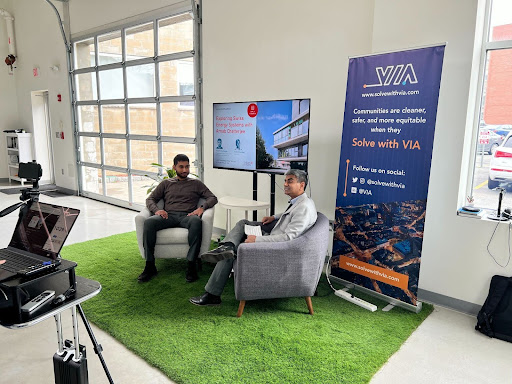
Arnab Chatterjee, Postdoctoral Researcher at EMPA, joined VIA’s CEO Colin Gounden for a chat about Swiss energy systems

If you tuned into our seventh VIA Visionaries livestream of 2024, you’ll know that our interview with Arnab Chatterjee was packed with things we value here at VIA: Energy efficiency! Smart buildings! User behavior! AI! Switzerland! If you happened to miss it, you’re in luck, we’ve got a solid recap of the interview and the full recording below!

Though this was our first time meeting Arnab in person, we’ve chatted virtually and have met a lot of the intellectually curious and energy-engaged folks at EMPA over the years.  So, naturally, we were excited to get Arnab in front of our team of VIAneers in Somerville and devoted followers tuned in around the world, to hear about his research at EMPA, which is focused on user behavior and energy systems. As you know, this particular topic is of interest to us – we recently made it to the final round of the ABB Scaleup Challenge 2024 in the Smart Buildings category, where we will showcase Skylight’s carbon reduction potential in Switzerland.

Here is a little background on Arnab:

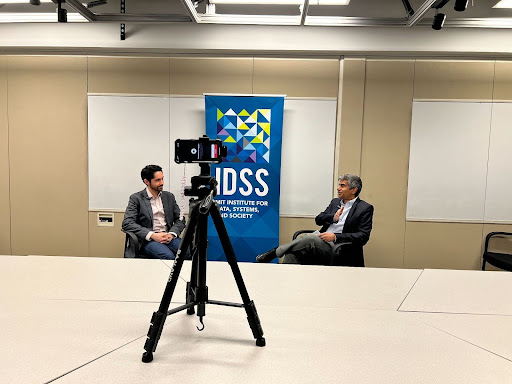
Arnab Chatterjee and Colin Gounden discussing Swiss energy systems.

Arnab Chatterjee and Colin Gounden discussing Swiss energy systems.

Arnab is a postdoctoral researcher at EMPA’s Urban Energy Systems Lab. Through his extensive experience around the globe, including research roles in Italy and his current work in Switzerland, he has cultivated a deep understanding of building performance, energy systems, and user comfort. In particular, Arnab is focused on incorporating user behavior into developing smart buildings, which includes occupant comfort and how they interact with automated building technologies. In addition, Arnab’s current work involves testing new technologies for practical applications, including notable projects like SWEET LANTERN, a Swiss Government funded, 8-year initiative to support the transition to 100% renewable energy.

Chatting on a beautiful morning at VIA HQ for nearly 30 minutes, Arnab answered questions ranging from how buildings contribute to energy and carbon emissions, to the way advances in AI will impact energy, and how user behavior compares in Switzerland versus the U.S. One of our favorite moments was when Colin asked Arnab to talk a little more about user behavior. And, we were intrigued to learn something new:

“Current building standards are a bit too restrictive on the temperature set points, creating issues on two different levels. First, we are adding too much operational energy usage by creating an environment that is too narrow and second, it doesn’t let the metabolic activity or the metabolic rate of the human body vary. This is not good in the long term.

What is the solution? 

Why not try to create an indoor temperature that varies a bit more? So, for example, having 21℃, and moving constantly for heating, why not let it vary from 18℃ to 21℃ [64℉ to 70℉]? So, we can kill two birds with one stone. We can save energy and let the metabolic exertion of the human body happen.”

To hear the full question and response, and Colin’s hilarious reaction “Any time people say the office is too hot or too cold, I’ll tell them, it’s for your metabolic rate!” – watch the video below!

We’re thrilled to have hosted our seventh VIA Visionaries livestream with such a passionate individual. As Colin said in the interview, “we have a value called love in = love out, if you love what you do it shows, and I think it clearly shows that you love buildings.”

Follow along on VIA’s website and social media (LinkedIn, X, Instagram, Threads) to hear more about our role in the LANTERN project and to keep an eye out for our next VIA Visionaries interview. 
VIA Visionaries: Exploring Swiss Energy Systems with Arnab Chatterjee

If there’s one thing devoted VIA followers know about us: we love all things clean energy and Switzerland 🇨🇭! That’s precisely why we are thrilled to host Arnab Chatterjee, Postdoctoral Researcher at EMPA’s Urban Energy Systems Lab, for the latest installment of our VIA Visionaries interview series.

In Arnab’s current role at EMPA, the Swiss Federal Laboratories for Materials Testing and Research in Switzerland, he is involved in research projects that explore user behavior and energy systems using machine learning. One project we are particularly excited to chat with Arnab about is called LANTERN (Living Labs Interfaces for Energy Transition). LANTERN is an 8-year clean energy project, one that VIA is proud to be a partner in. To hear more about this project and Arnab’s experience in developing smarter, more energy-efficient buildings, tune in to our livestream on Friday, April 5th at 10:30am ET, by RSVPing on our LinkedIn event page.

VIA attending Energy Exchange in Pittsburgh, PA

VIA’s Chief Commercial Officer, Joe Babiec, and Director, Client Delivery, Haden Snyder will be attending the upcoming Energy Exchange conference, hosted by the Department of Energy’s Federal Energy Management Program.

Renowned as the largest agency-driven training event and tradeshow for the federal utility community, the event focuses on innovative strategies, emerging technologies and solutions paramount to advancing towards a clean energy economy. Further details on the event can be found on the Energy Exchange website.

VIA’s Chief Commercial Officer, Joe Babiec and Senior Government Solutions Specialist, Sam Cruickshank attend AFCEA New Horizons 2024 Event

VIA’s Chief Commercial Officer, Joe Babiec and Senior Government Solutions Specialist, Sam Cruickshank attended AFCEA’s annual New Horizons event in Newton, MA – just around the corner from VIA’s HQ. The event brings together industry, academia, government, and military experts, to cover the latest in science and technology for defense and homeland security. Further details about the AFCEA Lexington-Concord chapter, visit their website: https://www.afcealexcon.org/.

AWS invites VIA’s Chief Commercial Officer Joe Babiec to represent VIA at CERAWeek Innovation Agora

AWS has invited VIA’s Chief Commercial Officer, Joe Babiec, to host a booth at AWS’ Agora House during CERAWeek 2024. According to the Financial Times, CERAWeek is “arguably the most important event on the energy industry’s calendar.” Innovation Agora is CERAWeek’s open marketplace hosting 200+ pods, 420+ sessions, and 650+ speakers with the goal of sharing ideas and insights on energy innovation, emerging technologies, and solutions.

If you are attending Innovation Agora, reach out to Joe Babiec and meet him at AWS’ Agora House: #370 AB from March 18-21. For more information on the event, check out the Innovation Agora website.

VIA’s Chief Commercial Officer, Joe Babiec, attends Elemental Excelerator’s Clean Energy Business and Innovation Week in Washington, D.C.

Elemental Excelerator invited VIA’s Chief Commercial Officer, Joe Babiec, to join its first-ever Clean Energy Business and Innovation Week event. The highly anticipated event, which took place in Washington, D.C. from March 4-6, 2024, brought together 150+ climate tech companies, policymakers, business leaders, and investors to discuss the importance of the clean energy transition.

During the action-packed event, Joe met with Kaylah Fermaint of the U.S. House of Representatives to talk about VIA’s mission and ventured to Axios’ HQ for a series of interviews that covered the accomplishments of the Inflation Reduction Act. Overall, we were impressed by the commitment of fellow attendees (seen together above) in following a similar mission to VIA’s of making our communities cleaner, safer, and more equitable 🌱.

From Zug to Davos: A whirlwind week in Switzerland

Last month, VIA’s CEO, Colin Gounden and Client Delivery Lead, Becky McClements ventured across the Atlantic to meet our Lead Software Research Architect, Madjid Aoudia in none other than, Switzerland 🇨🇭!

The trio had an action-packed week that is well worth the recap for our devoted VIA followers. So, who is ready to take an adventure with us from Zug to Davos?

Day 1: Zug

If you are new to VIA’s blog or just need a refresher, there are many reasons why we chose Switzerland as our European headquarters: clean energy, data privacy, and blockchain, our wheelhouse! Once our team landed in Switzerland, it was off to our office in Zug by train. Madjid and Becky also took the opportunity to snap a picture of our logo on the outside of the office, too!

Madjid Aoudia

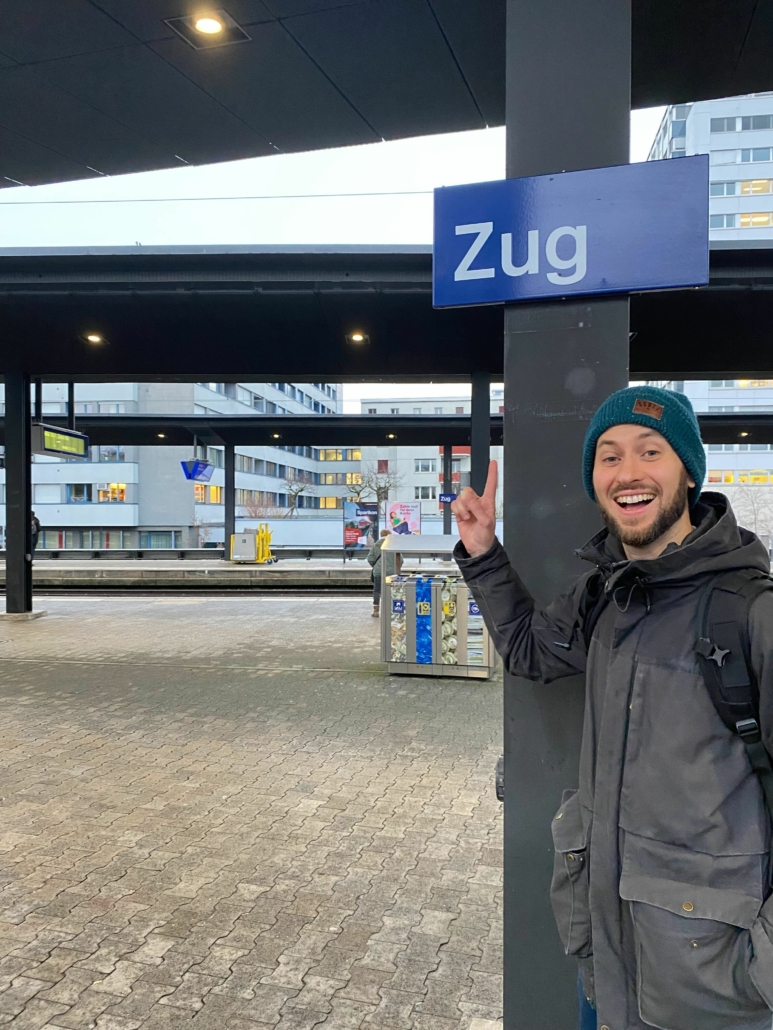
Madjid Aoudia ready for his trip to Zug.

Madjid Aoudia & Becky McClements

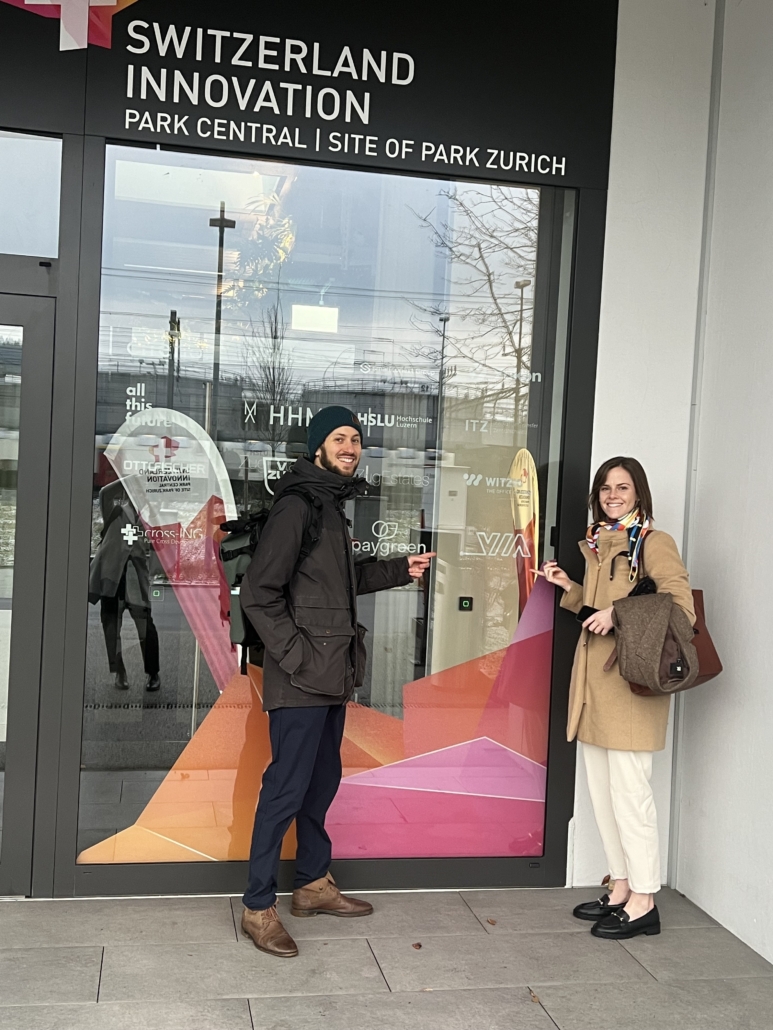
Madjid and Becky McClements at VIA’s European headquarters.

Then, we met with one of our energy customers for a full-day workshop at our office, followed by dinner with executives in the utility space.

Day 2: Zurich + Lucerne

We kicked off day two in: Zurich! Our team met with government entities to discuss how we can support their data privacy initiatives. With a new data privacy code of conduct coming into effect in January, two agencies reached out to VIA for our expertise in data privacy. We look forward to continuing the conversation and deepening our support for Swiss data privacy efforts.

Later that day, we made our way to Lucerne, home of the HSLU iHomeLab. As we mentioned in our blog from 2022, “The year in Switzerland,” HSLU has been one of our research partners in energy and data privacy since 2018. We were thrilled to see the research they have been doing in energy efficiency and IoT and to have our Expansion Manager, Ray Neubauer join us!

VIA’s team

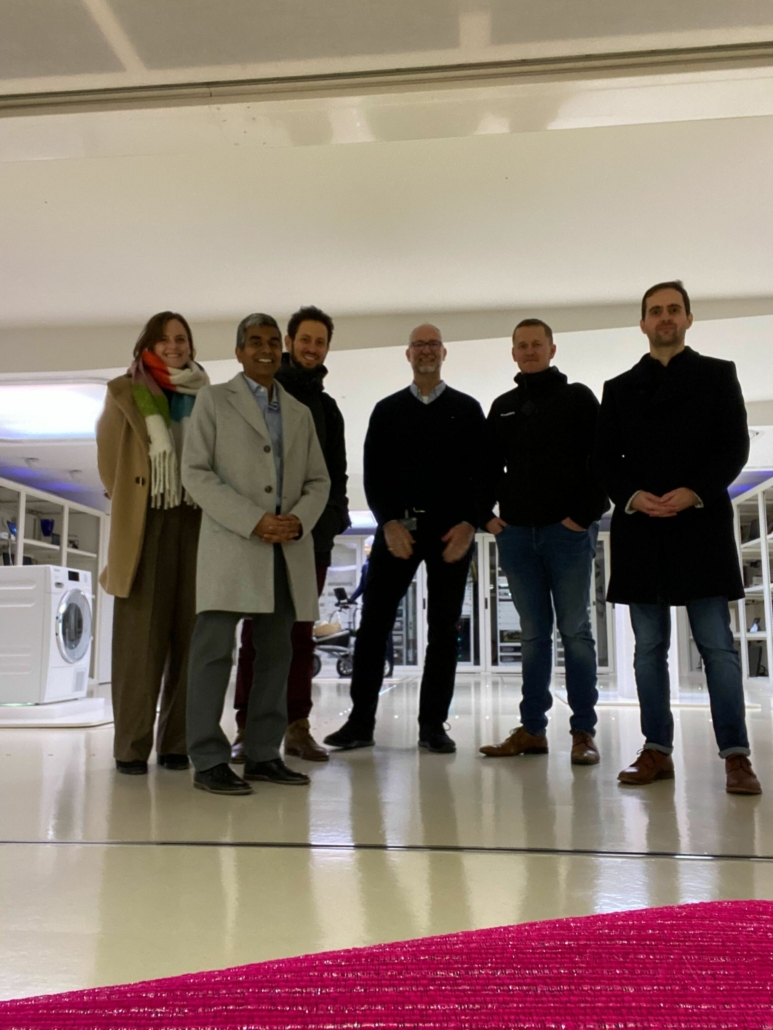
VIA’s team alongside the iHomeLab team.

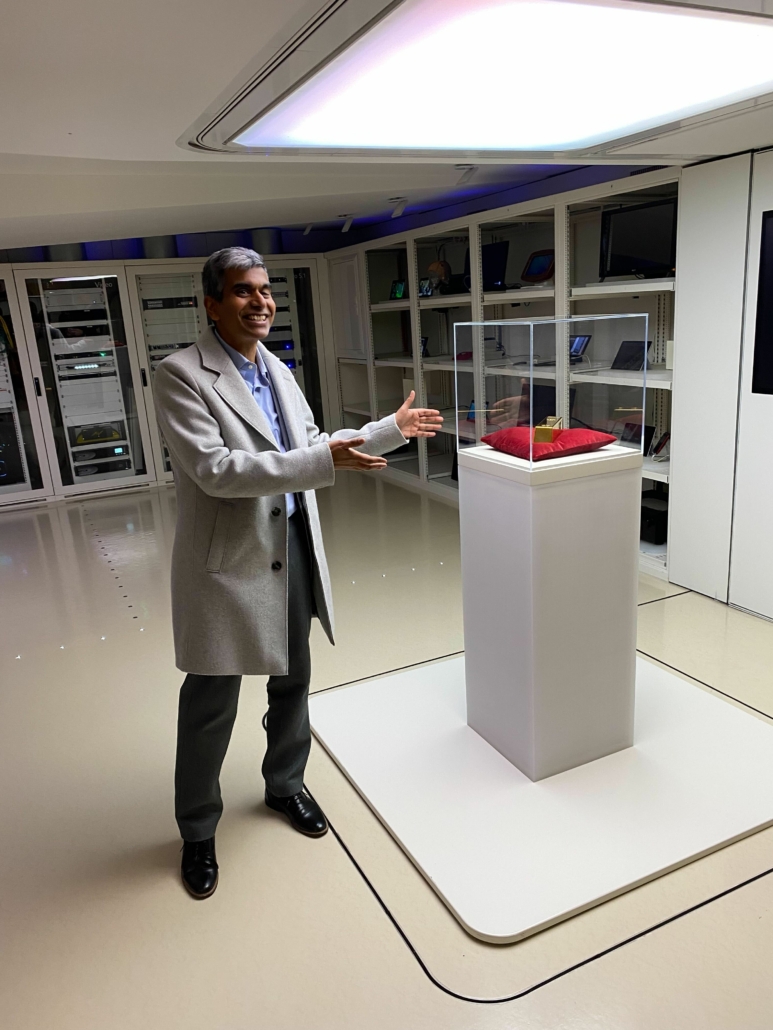
Colin showing off some of the fantastic innovations at iHomeLab

Colin at iHomeLab.

Finally, to cap the night off, we had dinner with executives in the electric vehicle and automotive space. Stay tuned for more on this front!

Day 3: Davos

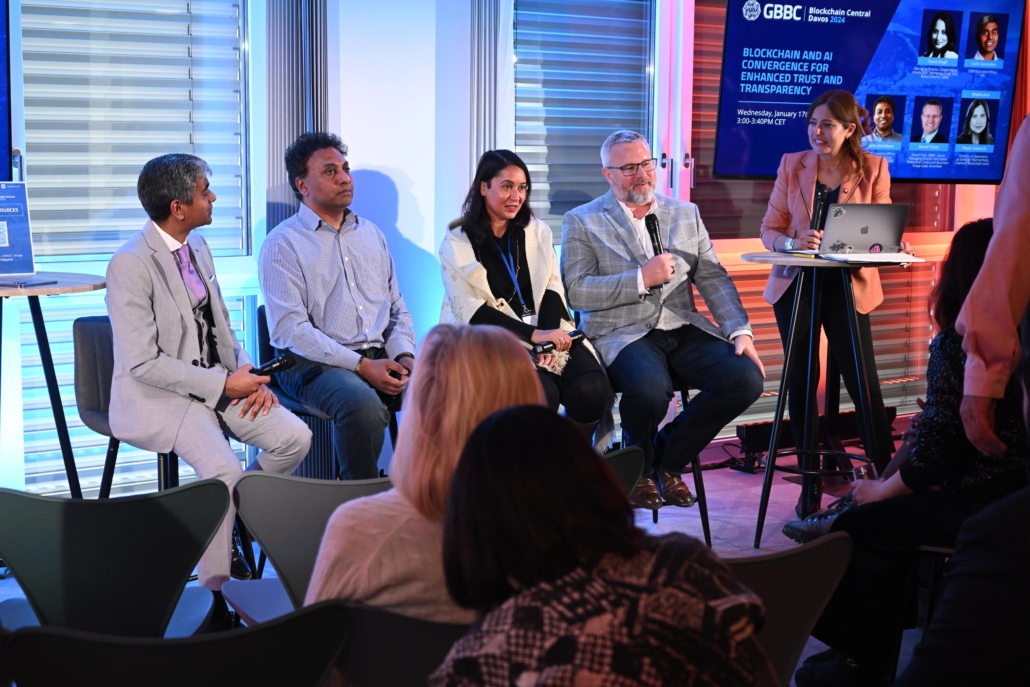
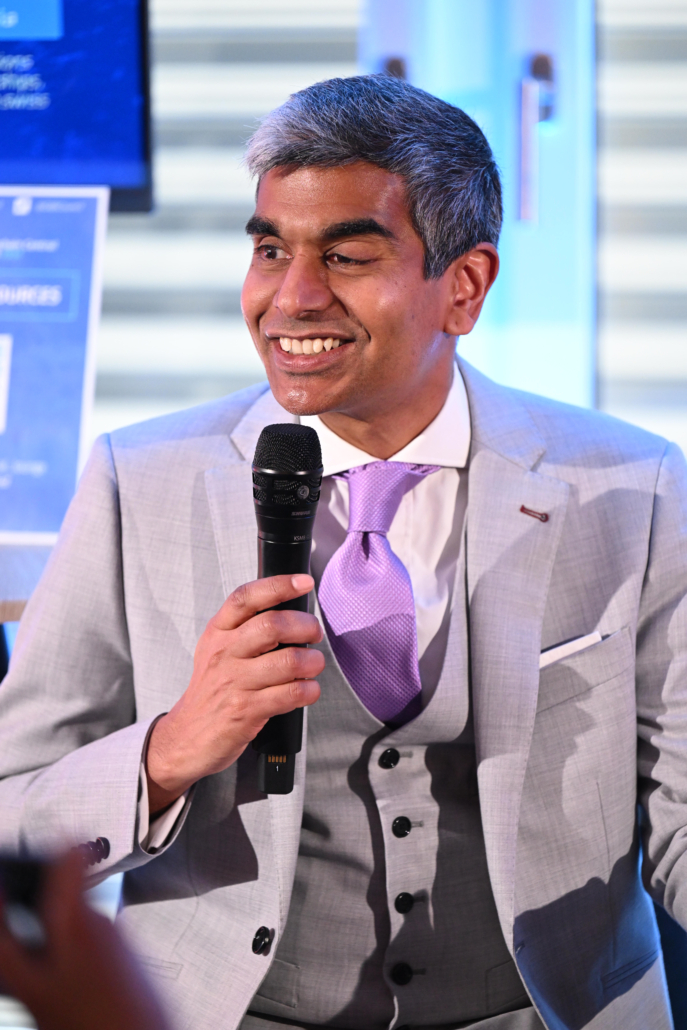
The highlight of our week was traveling to Davos for the Global Blockchain Business Council (GBBC)’s 7th Annual Blockchain Central Davos event, hosted in parallel to the World Economic Forum. Colin was invited to speak on the panel, “Blockchain and AI Convergence for Enhanced Trust and Transparency” alongside Tanvi Singh, Managing Director, Global Digital Assets Technology Lead, UBS, John deVadoss, Co-Founder & CEO, NeuralFabric.ai, and David Treat, Board Chair, GBBC; Senior Managing Director and Global Metaverse Continuum Business Group Lead, Accenture.

Paola Valencia, Director of Operations, & Strategic Partnerships, Home of Blockchain.swiss, was the moderator, who did a fantastic job of keeping the conversation flowing and asking terrific questions. If you are short on time, don’t miss our favorite moments at the timestamps from the recording below:

  • 9:23: Watch Colin introduce himself and VIA in Swiss German!
  • 19:08: Paola says she was thrilled to see Colin’s name on the panel because she wanted to hear how VIA has been using AI and blockchain with actual companies and how those use cases impact humanity.
  • 35:40: Colin provides his thoughts on the next big thing in the next six months related to AI and blockchain.

Thank you again to GBBC! The whole event from start to finish was world class and we are grateful for the opportunity (and the high quality pictures below 😉).

GBBCColin

Day 4: Wrap up!

After the eventful day in Davos, not to mention the fact that we ran into people we know from Boston, San Francisco, and Washington, D.C. (the Americans were out in full force!), we closed out our trip by meeting with another automaker and more government officials in the evening.

As we reflect on the week, we wanted to acknowledge a few small things that make a big difference. Everywhere we went, there was next-level hospitality, people made time in any way they could to meet with us, and embraced VIA with open arms. All of these points keep us coming back (and the spectacular scenery isn’t too bad either!).

This trip laid the groundwork for what is sure to be some exciting announcements this year 📣.

Davos

View of the mountains during our train ride.

Fast and Curious 6: AI Edition

The Fast and Curious blog series you know and love is back! This time, we are bringing you all things AI. Watch the 3-minute video below to learn how we break down the enterprise barriers to GenAI adoption (or you can read the full transcript that follows).

Below is a transcript of the video:

Welcome to Season 2 of Fast and Curious – the AI Edition. Everyone, everywhere is talking about Generative AI and Large Language Models. Having said that, large enterprises have not widely adopted Generative AI, and for some very legitimate reasons.

In this series, we’re going to talk about three of the big enterprise barriers to GenAI adoption and wait for it, how we’ve solved for them. So, let’s get started.

Number one on our list of GenAI blockers is: Intellectual Property Restrictions.

The basic problem is that, how can I know whether the text or responses that we’re getting back from an AI system are okay for us to use? That is, how can I be assured that the AI is not using some source material that might have a copyright restriction or an IP restriction because that might make me liable as a result. The flip side of that is, how can I be guaranteed that whatever I send to an AI model won’t be used by the model and sent to someone else at some other company? 

The press about employees inadvertently doing just that has been pretty scathing, so everyone and every company will want to avoid that.

That is the number issue that we have seen that gets talked about. While it’s the biggest issue, it’s not the only one.

Number two on the list of concerns is: consistency.

Experts talk about GenAI as being stochastic models. What they mean by this is that there is some randomness in the results that they generate. Sometimes AI can even generate false answers. The kinder euphemism is to say that the models hallucinate. But, a wrong answer is still a wrong answer. If you are an expert in the field, you may be able to figure out how to tell the difference. The advantage of these systems, available to everyone, is that you don’t have to be an expert, so errors going unnoticed are a real risk.

Last but not least, number three is: cost or availability of the system.

GenAI models use GPUs generally rather than CPUs, and that is expensive and it’s in short supply. Maybe I should say, they are in short supply, so they are very expensive. This is the reason that NVIDIA became a trillion dollar company last year. Even big players like AWS and Microsoft Azure have a scarce supply of GPUs, so you can imagine how in demand they are.

To recap, issue one is IP Protection, issue two is Consistency and fighting hallucinations, and issue three is Cost.

If you are an enterprise CIO, CISO, or Chief Data Officer trying to figure out how to provide GenAI to your employees that all of your users are clambering for and are trying to overcome these barriers, watch out for the next episode of Fast and Curious about these solutions.

Can’t get enough of these Fast and Curious videos? Well, we want to hear from you! What topics should we cover next? Drop a note in our inbox to let us know: info@solvewithvia.com.

VIA energy experts attending Geotab Connect 2024 in Las Vegas

VIA’s VP, Strategic Alliances, Michael DeNitto, and Energy Solutions Lead, Will Chapman will be attending Geotab Connect 2024 in Las Vegas, taking place February 14-16, 2024. The event focuses on best practices and innovative technologies for fleet management. For more information on the event, visit the Geotab website. If you plan to attend, reach out to Michael or Will to set up a time to meet!

U.S. Department of Energy’s national lab concludes VIA’s software has the potential to become the industry standard to help EV fleet managers meet decarbonization goals

The U.S. Department of Energy (DOE) research lab, Idaho National Laboratory (INL), known for their nationwide leadership in electric vehicle (EV) batteries and extensive multi-decade research on charger reliability, conducted a rigorous evaluation of VIA’s carbon tracking proofs and confirmed it has the ability to become an industry standard in helping EV fleet managers meet decarbonization goals.

In a recently published article by INL, “The proof is in the software,” INL’s team discussed in detail how the evaluation reviewed VIA’s mathematics (zero-knowledge proofs), code, and working software, and concluded:

The mathematical approach and the software worked, and it has potential to become an industry standard for providing credible, verifiable, and privacy-sensitive carbon data.

The DOE is interested in cyber secure ways of verifying data used to accelerate the transition to clean energy. INL was appointed by the DOE as the laboratory of choice to evaluate how well VIA’s software works to verify sensitive carbon data during charging events without revealing private data such as EV charging time, date, location, and owner. Speaking of the process, VIA’s CEO Colin Gounden said:

Working with INL on this evaluation was an exceptional experience for us at VIA. Not only did they have expertise in zero-knowledge proofs, they asked thoughtful questions and were very responsive. Validating that VIA has the potential to become one of the most trusted sources for verifying carbon data while keeping information private and secure, has been invaluable.

VIA is currently working with large fleets in the U.S. and Switzerland, totaling more than 54,000 vehicles. VIA aims to expand the number of fleets to help EV managers worldwide meet their decarbonization goals.

If you are interested in learning more about the DOE evaluation, carbon verification, or how we can help your team achieve decarbonization goals, contact us!

VIA Visionaries: Smart Policies for a Smarter Grid with Graham Turk

It’s the VIA Visionaries you know and love, but on location! Join us LIVE from MIT as VIA’s CEO Colin Gounden sits down for a chat with MIT Energy Initiative’s Graham Turk to talk about smart policies for a smarter grid!
In Graham’s current role at MIT, he is in charge of researching grid impacts of rapid electrification and tariff design to promote adoption of heat pumps and electric vehicles. Prior to joining MIT, Graham spent several years with Green Mountain Power, well known for providing 100% carbon-free electricity to 266,000 customers across Vermont.
For those of you interested in clean energy, EVs, and overall love a good conversation, this is a must! Tune in on Thursday, February 8th at 12:00pm ET by RSVPing on our LinkedIn event page.

Power Up!: Accelerating Growth in 2024

We’re gearing up to Power Up! VIAneers worldwide will unite to shape our vision for 2024. This two-day event, with the theme, “VIA Vision”, aims to fuel accelerated growth for a groundbreaking 2024! Follow along on LinkedInX, and Instagram for pics and snippets of our hybrid event.

VIA’s CEO Colin Gounden invited to speak at GBBC’s 7th Annual Blockchain Central Davos event in Switzerland

We’re thrilled to announce that VIA’s CEO, Colin Gounden, has been invited to participate in the esteemed 7th Annual Blockchain Central Davos event, hosted by the Global Blockchain Business Council (GBBC) from January 14-18, 2024. This prestigious conference coincides with the annual World Economic Forum meeting in Davos, Switzerland, a testament to the magnitude and influential reach of this event.

Colin will be on a panel that covers the topic of AI and blockchain and will take place on January 17, 2024 from 3:00-3:40pm CET.

For more details, visit GBBC’s official event page and follow us on LinkedInXInstagram for the latest updates!

VIA showcased during GAI Insights’ Learning Lab live stream

GAI Insights, an analyst firm helping AI Leaders achieve results with GenAl, invited VIA’s CEO Colin Gounden as a special guest on their Learning Lab series. The weekly series covers use cases of GenAI and showcases new and exciting projects in the space.

After meeting at MIT as judges of a recent competition, Paul Baier, the CEO and principal analyst at GAI Insights, asked Colin to come on the weekly series to discuss the technologies VIA is using, more specifically, Mistral, and give a demo of VIA’s askJARVIS application.

During Colin’s portion of the nearly 60 minute session, he gives an overview of VIA’s mission and how that shaped where our company is today in terms of data privacy:

“Data is often too restricted, too tightly held. As we started to work more with the Air Force, Space Force, and the Navy, it became evident that a lot of common visualization tools were good for unsecured data, but not at a high level of classification.”

Colin goes on to give a detailed, 26-minute demo of VIA’s askJARVIS application, which solves just that, visualizations for highly sensitive data. There were exceptional questions asked throughout the demo ranging from which LLM we use, GPUs vs. CPUs, and his expert opinion on this topic.

If GenAI for highly sensitive data is of interest to you, this is a recording you don’t want to miss. Watch the video below and also reach out to us to learn more at info@solvewithvia.com.