
Need a laugh?
We’re back at it – this time giving you some laughs from our remote team. See our video below for the funniest moments since working remotely.

We’re back at it – this time giving you some laughs from our remote team. See our video below for the funniest moments since working remotely.
Through a Q&A-style interview, you will hear from VIA team members about things like a typical day at the office and favorite foods.
The only typical part about my days at VIA is that it changes every day! As the go-to media person, I’m lucky to have the opportunity to collaborate with different teams and work on a variety of projects. Some days, I’ll be working on filming and editing videos for VIA (check out the careers video produced by yours truly). Others, I’ll get to flex my design eye and work with our developers to create user interfaces for our products. Today, I’m updating our website and writing a fabulous blog.
There are so many cool things I want to talk about, it’s difficult to choose!
For one, I really enjoyed working on the interface for the GDAC™ Transformers 30-Minute Pilot. In that project, I designed the user experience for a data analysis demo. It presented an interesting challenge: how can we make complex analysis simple for others to understand, operate by themselves, and see the value? I was able to participate from the conceptualization stage all the way to the user interface and experience. It was so rewarding to see the pilot go from its baby stages to a full-fledged site.
My favorite VIA memory might have to be this past holiday party. We made gingerbread houses, ate some delicious desserts (essential to the VIA brand), and played a ridiculous reindeer ring toss game that had us crying with laughter. Hats off to Jackie for being our star party planner!
I can’t deny that I’d be playing Animal Crossing on Nintendo.
Nothing can outrank my comfort food of choice: a nice, warm bowl of pho. It’s Vietnam’s most famous noodle soup, light but also flavorful. But to me, it’s like getting a hug from Grandma.
You should know that at VIA we’re always working on improving ourselves. With retrospectives at the end of each sprint, open ears during one-on-one’s, and offsites each year, being open to feedback is an essential part of VIA culture.
Along with people all over the world, the VIA team has adjusted to a new normal over these last few months.
Given our distance apart, we asked some of our team members what they look forward to each day of working remotely.
Check out our video below to see what our team has to say (spoiler: this will give you all the feels!)
VIA’s Joe Babiec will be co-presenting alongside Ben Bowler and Antonios Papaemmanouil of the Lucerne School of Engineering and Architecture at Lucerne University of Applied Sciences (HSLU). VIA and HSLU met during the SUEID event in 2019 and have since been working on a collaboration. The virtual event will take place on June 4th beginning at 10:30am ET, with VIA and HSLU’s joint presentation at 11:15am ET.
VIA’s Chief Operating Officer and Co-Founder, Kate Ravanis, was interviewed by The Tech Tribune for its Profile of a Founder blog. The blog features founders of companies selected by The Tech Tribune as the “Best Tech Startups,” from cities in the US. VIA was included as one of eight companies on the 2020 Best Tech Startups in Somerville list.
In the interview, Kate gives some insight on how VIA got its start, challenges along the way, and what the future holds for the company. She also gives some thoughtful advice for aspiring entrepreneurs:
“We have lots of values at VIA that I live by every day. I think the one that is most important and has made the most impact on my career is “love in = love out”. The idea behind the value is if you love what you do, it will show in all your interactions with colleagues, clients, and work. There are so many challenges that you will encounter on your journey, and it is often hard to see how you will get beyond them. I have found just focusing on the things that I truly believe in and the reasons that got me started in the first place have translated to stronger partnerships, customer relationships, and ultimately a team of colleagues who will stick by you until you come out successful on the other side.”
For the full interview, check out The Tech Tribune’s blog.
VIA is pleased to share that we have been included in The Tech Tribune’s 2020 Best Tech Startups in Somerville list. The list includes eight startups in Somerville with solutions that range from 3D printing to 360 degree smart video conferencing cameras to software for the rental real estate market.
According to the Tech Tribune, there were four factors in deciding the top startups including (1) revenue potential, (2) leadership team, (3) brand / product traction, and (4) competitive landscape.
For the full list of startups, check out their website.
Through a Q&A-style interview, you will hear from VIA team members about things like a typical day at the office and favorite foods.
One of the things that I love about my job is that for me, there is no such thing as a “typical day.” Because my role encompasses the entire candidate and employee experience, there are often lots of different projects going on at any moment. Examples include planning recruitment events, working with the team on our professional development program, or even ordering a whole lot of pizza for our regular lunch and learn sessions.
I always try to start my day by consulting my to do’s and then from there, it can be a mixture of meetings, catch-ups with team members, interviews, or planning the next team event.
People! I am motivated by the idea of enhancing people’s work experience, whether it’s exploring ways to support professional development or strengthening the connection between our team and our vision. Plus, finding ways to celebrate and have fun together never gets old!
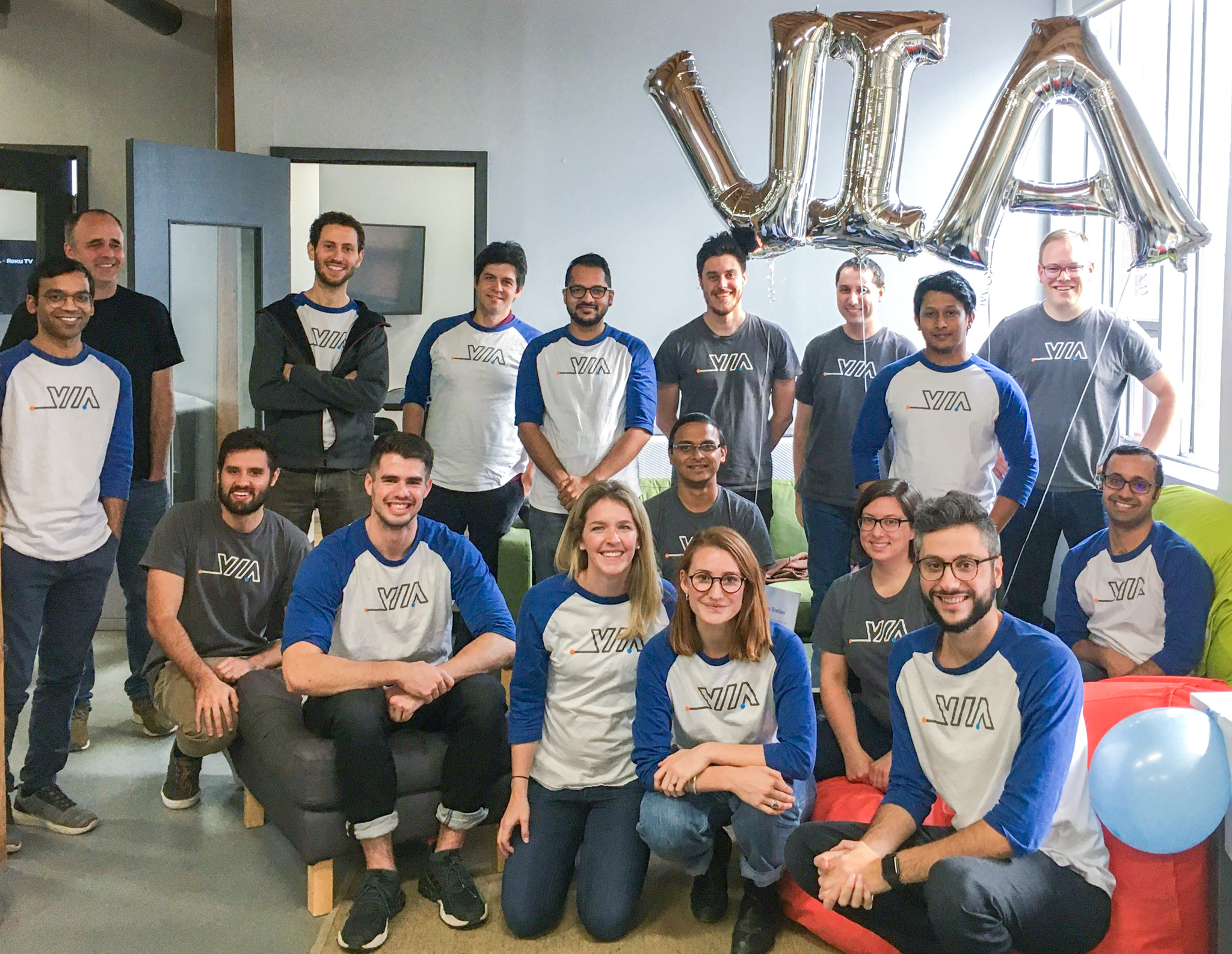
Introducing Lattice, our performance management platform, was a big win for me. Lattice is a tool that helps us plan and track goals, organise 1:1’s, and is an excellent vehicle for supporting a feedback-rich culture. We love the integration with our #shoutouts channel on Slack for constant praise and appreciation! (Not a paid plug, I promise).
My first official day is something that sticks out. Not only were lots of pastries involved, but the whole office pushed pause in whatever they were doing to welcome me over breakfast and to get to know more about me and my background. This really set the tone of inclusivity and respect that has not faded since!
The angel on my shoulder says learning french, but the devil on the other says catching up on some z’s.
I can’t go past a really good Kiwi meat pie!
In addition to being a kick-ass energy tech company, our team could have a side career in the food industry. Everyone is either an excellent home cook and/or just genuinely enjoys the ritual of eating great food.
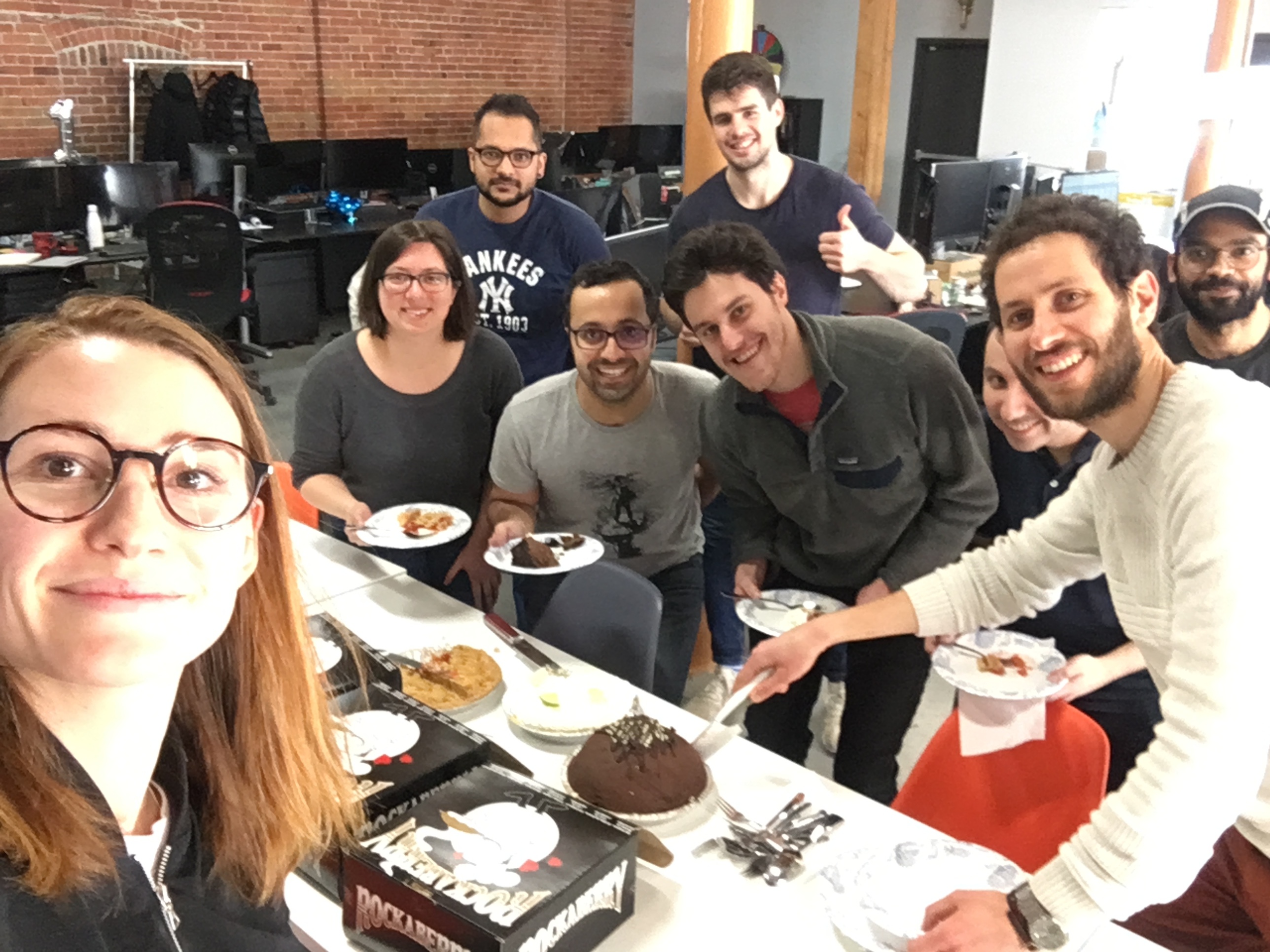
Through a Q&A-style interview, you will hear from VIA team members about things like a typical day at the office and favorite foods.
My typical workday starts with a coffee, from either one of the local third-wave coffee shops or the machine at work. Once I’m settled, I look at my calendar and plan my day, this can be anything from looking at notes from a previous meeting to making sure I’ve booked a room. When that’s complete, I look for something I can quickly finish before Scrum of Scrums or continue with the task from the day before.
Each day at 10:30, I attend Scrum of Scrums. As a technical lead, I need to know how my epic is progressing, so typically, I will check in with my colleagues before the meeting for any updates and check that the JIRA board reflects our current progress. Typically, there are a few meetings to take a deeper dive on topics raised at Scrum of Scrums. These are a great way to make sure that we are aligned across our epics and to share knowledge.
Having conditioned myself over many years that 12 o’clock means lunchtime, I take a break at 12 to either buy lunch or heat up some leftovers. Lunch is a great opportunity to socialize with my colleagues on different epics and to give my brain some time to process in the background. Conversations range from the latest computer game, movies, and hockey, but mostly food.
After lunch, my afternoons consist of meetings, customer calls, and development time. My time tends to be split into hour-long chunks which I’ve planned out in the morning. A lot of my work revolves around supporting my colleagues by answering questions, problem-solving, and pair-programming. One of the favourite ways to tackle a problem is to jump into a spare room and rubber duck the problem. Basically, by describing a problem to a rubber duck, you verbalise the issues you are facing and through this process, you tend to have a better understanding of your problem. Luckily, VIA has hired people rather than rubber ducks, so in fact, you can also get feedback, questions, and suggestions from your colleagues.
At the end of the day, which is typically signaled by the sending of GIFs on Slack that it’s home time, I make sure to leave my work in a state that allows me to continue the next day.
At VIA, I have had the opportunity to work on many different projects. I’m proud of every single one of them, but if I have to choose one, then I am most proud of the GDAC™ Transformers project. The reason I have chosen this project is because it is the first application built on top of TAC™. I’m proud to have helped develop TAC™, but it’s even better to use it for the benefit of our partners. The partnership aspect is another element that makes me proud to have worked on GDAC™ Transformers. I have worked closely with our partners for almost a year and to see how far we’ve come together is fantastic. Having had the opportunity to meet our partners in person, I was able to see how the work we have done together will benefit them going forward.
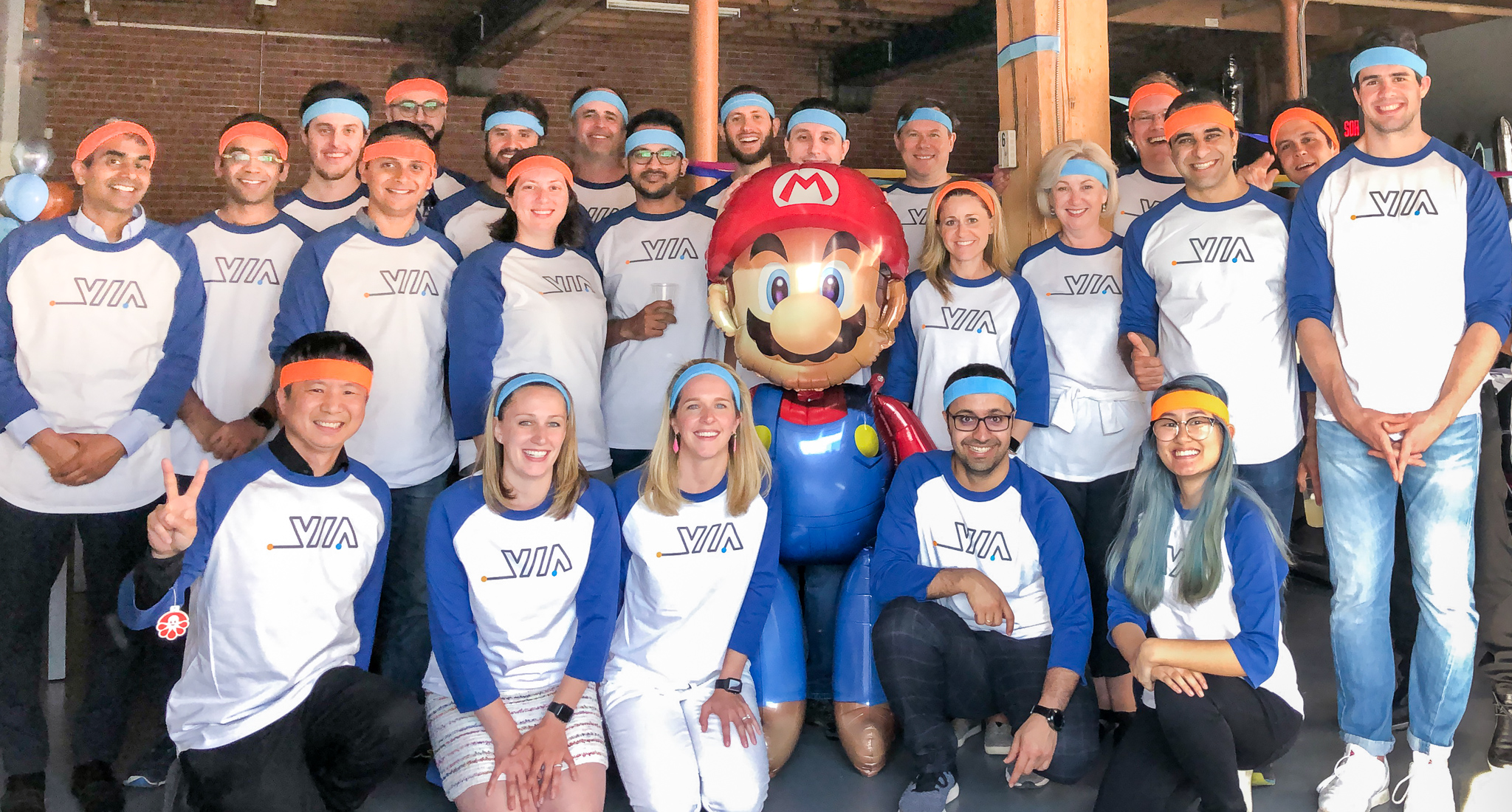
VIA is a great place to work, I have so many memories from my time here. One that stands out to me, in particular, was “Game Night”. Each offsite (a company-wide in-person event where we talk about wins, solve project challenges, and plan for the next big thing) typically has an activity where we have a chance to socialize such as bowling, mini-golf, and a scavenger hunt. But, nothing quite beats seeing your own office converted, in-secret, to the ultimate “Game Night” experience to the point where it is almost unrecognizable and something I will never forget.
One thing I say to myself quite often is “If only I had more time”, but what would I do with that extra time. If I had an extra hour in my day, I would like to improve my French. Montreal is a fantastic bilingual city and very little French is actually necessary, but to really appreciate its culture and to get the full Quebecois experience a good handle on French is essential.
My go-to food has to be a sandwich, you can’t beat the convenience, variety, and taste of a good sandwich. In particular, I’m a big fan of a bacon butty, which, for those of you who are unfamiliar, is a very basic sandwich with bacon and butter filling. Bacon buttys tend to be eaten in the morning at home or out and about. They are an excellent way to start the day if camping, at a sports event, or just a day of gardening.
If you have the pleasure of working at VIA then you should know that using GIFs in presentations and on Slack is encouraged. Communicating context and meaning using just text can be difficult at times, but GIFs can add so much more. A strong GIF game is essential to signal it’s time to go home, go to the pub, play badminton, get bread, or celebrate the latest prize that VIA has won.
We’re thrilled to launch a new blog series at VIA called “Meet the Team.” Through a Q&A-style interview, you will hear from VIA team members about things like a typical day at the office and favorite foods.
Like most startups, we are working on lots of exciting projects. Here are some of the challenges that I’m involved in on a daily basis.
It is hard to pick just one piece of work that I am the most proud of since we are tackling lots of exciting new projects and challenges. But, in the first months of being at VIA, I wrote code to help us better ingest and manage data. It was the first time that I was put in charge of developing some code to solve a problem and make tasks more efficient for the team. We still use part of the code today and are continuously improving it. I think it was a real issue and being able to solve that problem was really rewarding.
My first offsite was really special for me, it was the first time I saw the whole team in-person and was able to learn more about every member of the team. It was also really nice to learn about the next challenges we were going to take on as a company.
I like to learn, so anything from reading, learning a new skill, watching a documentary, or building something new would be mostly what I would use that hour for.
As a proud Montrealer (born and raised) I must go with Poutine (from La Banquise for the best in Montreal). I wouldn’t eat it every day because it is not the healthiest food, but I never say no to Poutine when proposed to me.
The different backgrounds and diversity of every person in the company makes it a unique and fun workplace.
VIA’s COO, Kate Ravanis and Team Leader, Product Development, Ashley DaSilva have been invited to speak at Brandeis University for the session, “Analyzing data in the energy industry.” Kate will provide students with an overview of VIA and Ashley will discuss the ways we solve problems for our customers. Check out their website for the full agenda: https://www.brandeis.edu/global/events/2020/climate-change/index.html.
VIA was delighted to support Nebraska Public Power District (NPPD) specifically and innovation in Nebraska more generally this past weekend. VIA’s CEO, Colin Gounden traveled to Aurora, Nebraska for the Aurora Open & Innovation Showcase to meet with hundreds of students and local community members to give them a glimpse into working for a technology startup. During the event, there was also a robotics competition, as seen in this local news clip, where the VIA sticker made its TV debut!
VIA is pleased to share that we have been awarded funding through MassCEC’s InnovateMass program for a behind the meter energy storage project. Governor Charlie Baker discusses the importance of supporting the 18 startups awarded:
“Providing strategic support to entrepreneurs and startup companies is critical to helping Massachusetts maintain its position as the national leader in cleantech innovation,” said Governor Charlie Baker. “These early-stage companies provide a vital source of job creation and economic value while helping the Commonwealth meet the challenges posed by climate change, and we are committed to helping support the growth of the vibrant startup community.”
For the formal press release titled “Baker-Polito Administration Announces $1.7 Million in Funding for Clean Energy Startups” visit MassCEC’s website.
VIA, a leader in providing energy analytics while maintaining data privacy and security, was named a 2020 Global Cleantech 100 company by Cleantech Group.
The 2020 Global Cleantech 100 is the 11th edition of the respected annual guide to the leading companies and themes in sustainable innovation. It features the private, independent, and for-profit companies best positioned to contribute to a more digitized, de-carbonized and resource-efficient industrial future.
An excerpt about VIA from the report:
Keep an eye on
Companies that enable the sharing of valuable data between companies facing similar challenges are growing in importance. Via Science (VIA), a newcomer to the list, is using a combination of AI and blockchain to clean datasets from large energy players and share them anonymously with peers to accelerate problem-solving in this space.
The list combines Cleantech Group’s research data with qualitative judgements from nominations and insight from a global 80-member expert panel of leading investors and executives from corporations and industrials active in technology and innovation scouting. From pioneers and veterans to new entrants, the expert panel broadly represents the global cleantech community and results in a list with a powerful base of respect and support from many important players within the cleantech innovation ecosystem. The Global Cleantech 100 program is sponsored by Chubb.
“It feels right that our first list of the future-defining 2020s, should see a continued strengthening in the representation of truly impactful and necessary innovations to transform our diets, to enable a more renewable-heavy energy system, and to capture and utilize the vast levels of CO2 we have been freely emitting for decades,” said Richard Youngman, CEO, Cleantech Group. “Also included in our 2020 list are some big and critical shots at solving global problems – from proving out fusion and next-gen batteries to zero carbon aviation.”
About VIA
Headquartered in Boston, VIA provides mission-critical software for secure data exchange and trustworthy AI without compromising speed, simplicity, or resilience. Its military-grade architecture helps defense, public safety agencies, and humanitarian organizations use AI while maintaining control of sensitive, distributed data even in contested or offline environments.
About Cleantech Group
Cleantech® Group provides research, consulting and events to catalyze opportunities for sustainable growth powered by innovation. At every stage from initial strategy to final deals, we bring corporate change makers, investors, governments and stakeholders from across the ecosystem the access and customized support they need to thrive in a more digitized, de-carbonized and resource-efficient future.
The company was established in 2002 and is headquartered in San Francisco with a growing international presence in London. Our parent company, Enovation Partners, is based in Chicago.
Media Contact:
Laura Dolby
Cleantech Group
Email: laura.dolby@cleantech.com
Tracxn, a market research platform that tracks startups, private companies, and innovative sectors, has included VIA in its coveted list of “Top Emerging Blockchain Startups.”
VIA is proud to be featured as a “Minicorn” on the list, as Tracxn explains:
“The Minicorns – are the high growth early stage ventures (Series A+). Watch out for these companies as they take the business to the next level, by scaling up for the accelerated growth.
For the full list, visit the Tracxn website.
As we kick off 2020, we can’t help but think of all the moments from 2019 that contributed to what we think will be the biggest year yet for VIA.
Near and Far, Our Team Represented VIA
In 2019, our team traveled the globe to help spread VIA’s message. Our CEO, Colin Gounden and Senior Vice President, Joe Babiec, gave presentations at European Utility Week in Paris, Swiss-US Energy Innovation Days in Austin, TX, various Plug and Play summits, EDP Starter Acceleration Program in Houston, TX, and EPRI Venture Day in Chicago, to name a few. Kate Ravanis, our Chief Operating Officer, also spoke at the Greentech Media Blockchain in Energy Forum in New York City.
In addition, we were proud to sponsor, speak, and participate in several events across Montreal including Women in Physics Canada, McGill Physics Hackathon, and Montreal AI Symposium. We opened our doors for Startup Open House Montreal and hosted our own VIA Open House Party (featured below).
Fresh Off the Press
We wrapped up 2019 with six press mentions, two “Top” lists, and two technical blogs written by our team members. To take a trip down memory lane, check out press mentions here: BitcoinExchangeGuide.com, Axios (and follow-up article) GreenBiz, Disruptor Daily, and Utility Dive; “top” lists here: Top 5 Big Data & Machine Learning Startups in Energy and The 10 Coolest Blockchain Startups of 2019 (So Far); and finally, our technical blogs: The Importance of Unit Testing and Understanding How EV Charging Behavior Affects Distribution Networks.
Our VIA Community Continued to Grow
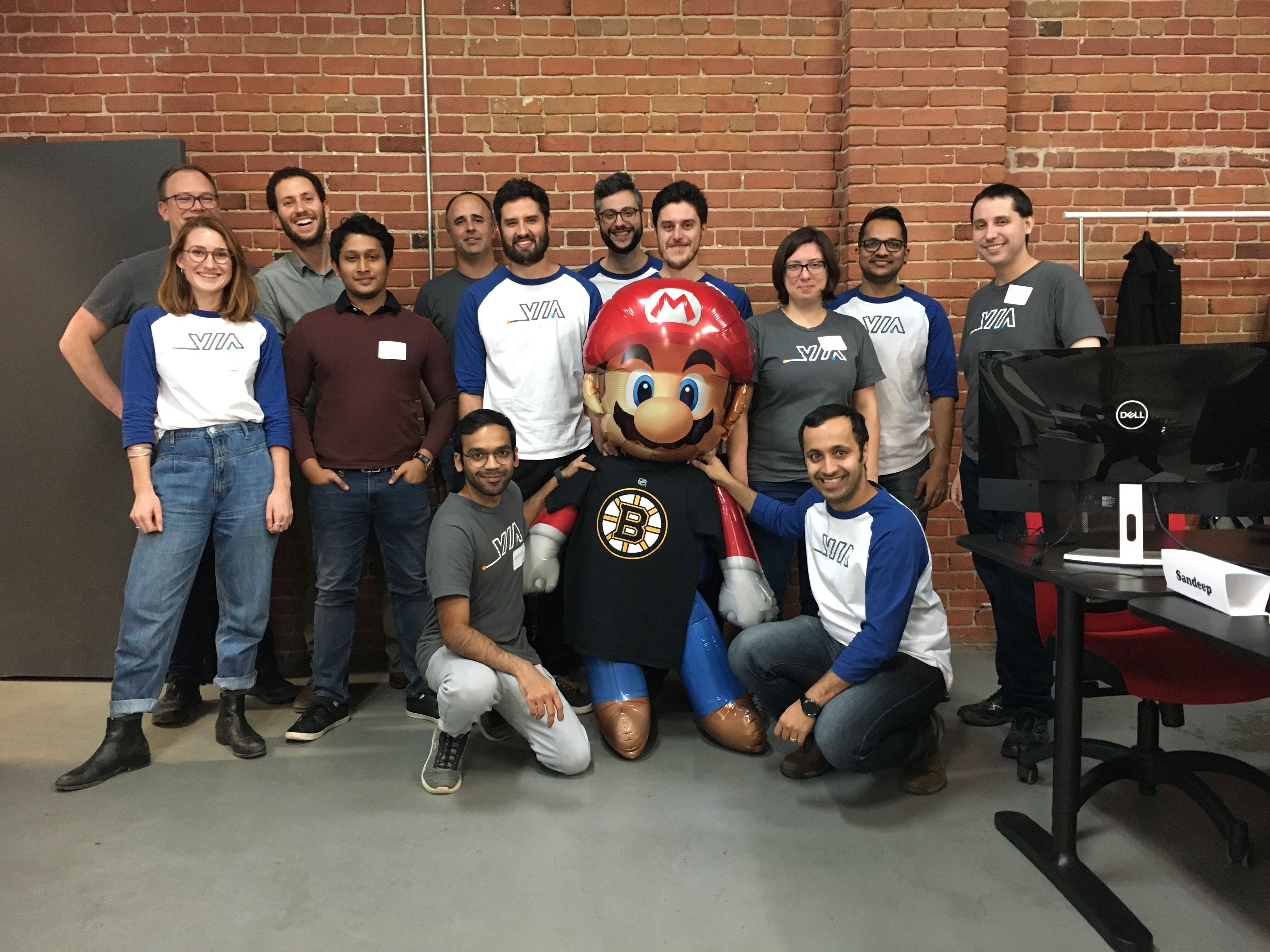
Internally, we hosted two In-Person All Hands events in Montreal (featured below) where our team brainstormed big ideas for 2020. We held our first annual VIA Spirit Week where each office celebrated what it means to be part of the VIA team. Lastly, we created two videos on what it’s like to join VIA: The VIA Team and Applicant Journey.
The VIA community includes more than just our internal team members. This year, we launched our GDAC™ program and welcomed founding members Hawaiian Electric and Vector to the VIA community. In addition, we were pleased to share that the Westly Group led an investment round in VIA.
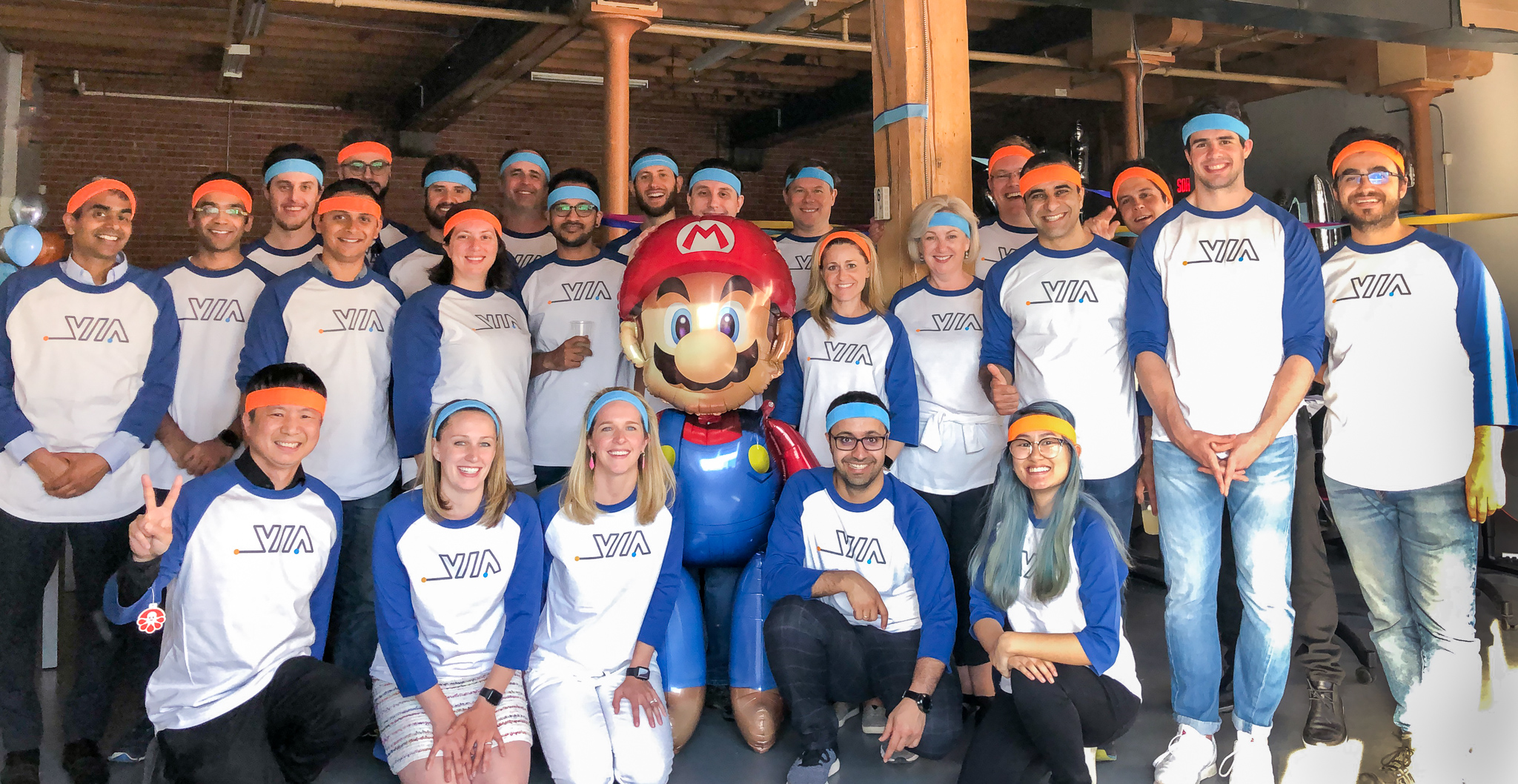
Our hats are off to you, 2019. Let’s do this 2020!