VIA attending AFCEA TechNet Cyber 2023 in Baltimore

VIA’s Chief Commercial Officer, Joe Babiec and Director, Client Delivery, Haden Snyder will be attending AFCEA TechNet Cyber 2023 in Baltimore, May 2-4, 2023. The event focuses on, “leveraging innovative technology, advancing cybersecurity and building new relationships between the military and industry sectors.” For more information on the event, visit the AFCEA website.

VIA CEO Colin Gounden selected to speak at IEEE Power and Energy Society Switzerland virtual event on NILM

IEEE Power and Energy Society Switzerland has invited VIA’s CEO, Colin Gounden, to give a presentation during its online, interactive workshop, “NILM for demand response – solutions for the energy crisis.” Colin will talk about advances in privacy and security for NILM, more specifically, how VIA uses Web3 to address NILM data privacy concerns.

The workshop will take place on Thursday, May 11, 2023 from 9:00am – 12:00pm ET (3:00pm – 6:00pm Bern).

For more information and to register for the event, visit IEEE Switzerland PES Chapter’s page.

VIA CEO Colin Gounden invited to speak at the Belfer Center for Harvard Blockchain for Impact Workshop

Harvard Belfer Center’s Technology and Public Purpose Project alongside Polygon Labs and Impact Plus invited VIA’s CEO Colin Gounden to speak on the intersection of sustainability, blockchain, and foreign policy at the invite-only Harvard Blockchain for Impact Workshop.

The half-day event, taking place on Tuesday, April 25th from 9:00am – 1:00pm, will explore “the potential of blockchain technology to promote positive social change in three domains: International Development, Public Goods, and Regenerative Economy.”

For more information, visit the Belfer Center event page.

Joe Babiec, Chief Commercial Officer at VIA, invited to join an AWS panel session at SXSW

AWS has invited VIA to join their panel session at the upcoming South by Southwest (SXSW) conference and festival. Joe Babiec, Chief Commercial Officer at VIA, will join a panel entitled “Space Data for Sustainability,” taking place at 1 PM CT on March 13th. Jason Cahill, Global Head of AWS Sustainable Cities, will moderate the session that will also include Myrna Bittner, CEO of Run With It, and Abhishek Dash, VP of Engineering at BlocPower.

VIA was selected to participate given its leadership role in Web3 for verification, integration, and analysis of private data, including space and satellite data. Join us as we look forward to hearing the insightful questions from Jason and the lively discussion from all the panelists.

Register here:

Polygon selects VIA to feature at Washington D.C. event

Polygon has invited VIA’s CEO, Colin Gounden, to speak at its upcoming invitation-only event in Washington D.C. on February 28th. The topic of the presentation will be VIA’s use of zero-knowledge proofs (ZKPs) and their application in real-world scenarios. Colin will host an interactive session during the event, and share case studies to give a look into where VIA’s technology has been implemented and its cybersecurity, data privacy, and data ownership benefits. Polygon and SID-US selected VIA based on our track record in deploying Web3 technologies at U.S. Government agencies like the Department of Defense, and more recently our testing of zero-knowledge proofs with the Department of Energy.

Learn more about the event here.

Top Burning Questions Q5: Where would I use a “Credentials Wallet?”

A wallet is a means for users to confirm their blockchain transactions. A common question from our customers is: “what‘s an example of a wallet in an enterprise context?”

To illustrate this, here’s an example of how a wallet might be used by an equipment manufacturer that is selling to other enterprises (i.e., B2B).

The equipment manufacturer provides an uptime guarantee to its customers. If the equipment is offline, the event can be automatically recorded in a blockchain for both the customer and the manufacturer to see.

The more important question for the manufacturer and its customers is: why was the equipment offline? Was the equipment offline for a valid reason, such as regularly scheduled maintenance? Or, was it offline due to a fault (and therefore there may be contractual penalties)? Or, were there external factors, like a flood, that will trigger insurance coverage?

In this example, the customer and the manufacturer submit their explanation and evidence (e.g., photos of the flooded equipment). Fingerprints of the documentation are logged on the blockchain. The actual data is stored off chain.

Recording the explanation and evidence in an immutable and auditable format creates trust. This trust speeds up processes like vendor performance review meetings, contract renewals, insurance claims, and regulator investigations.

So, what about the wallet?

Well, in a fully automated system there’s no need for one. That is, if the equipment being offline automatically triggered an alert, storing that alert information on the blockchain could be completely automated without the need for a wallet.

In our example, the “why” piece is a manual diagnostic. This information requires some authorization and authentication to make sure the person submitting it is who they claim to be, and has the permission to submit the documents.

One way to verify that the documents were submitted by authorized parties is to have each submitter digitally sign the transaction at submission. With multiple submitters (e.g., a manufacturer and customers), each party would have to integrate the submission system with their respective digital signature system.

With the VIA Credentials Wallet, all parties receive a simple mechanism to sign blockchain transactions without each participant having to integrate a new system. Each party also maintains their own enterprise user management systems (e.g., role-based access control (RBAC) models, identity access models (IAM), single sign-on (SSO), active directory service, etc.). This approach is particularly valuable at enterprises that have their employees hold their own private keys, such as through Yubikey (like Amazon, Apple, Google, Microsoft …) or an access card to login to their computers.

One of the key benefits to this approach is that the same Credentials Wallet can be used across multiple applications (e.g., systems from different manufacturers). In addition, RBAC integration with the wallet and VIA’s blockchain enables each organization to have their own rules to verify a transaction. Enterprises could decide to have multiple signatures to confirm a transaction, or only signatures from a certain role as submitters of a confirmation.

There are other benefits as well to a VIA-specific wallet. Long-time VIA blog readers will know that cybersecurity is a running theme as a differentiator for VIA in our platform. Everyone deserves the best cybersecurity. Over and above this, companies have a legal obligation to make sure they are protecting their financial and data assets. VIA has made the investment to harden VIA’s Credentials Wallet to U.S. Department of Defense (DoD) cybersecurity standards.

Looking for more information or have a related query? Don’t hesitate to contact us at info@solvewithvia.com and submit your question.

Top Burning Questions Q4: Why does VIA have its own blockchain?

Q4: Why does VIA have its own blockchain?

There are as many as 1,000 blockchains in the world today. A very reasonable question to ask is why create another one?

While VIA does connect to public blockchains if financial transitions are required, our motivation stems from customer requirements to control permission and analysis of off-chain datasets.

Read more below on the key reasons that drove VIA to create VIAsecurechain.

Data – Many blockchains are focused on financial transactions and not on data. At VIA, we are using blockchain to enable the secure verification, integration, and analysis of data. More specifically, we’re focused on large, decentralized datasets that need to be kept private and confidential. We accomplish this by storing hashes of individual digital assets (e.g., datasets) and making them searchable through an off-chain database. This private data use case considerably narrowed the set of available blockchains.[1]

CostMany blockchains today require a token system for consensus and key functionality. While there are benefits to a token, gas fees can add up quickly. A voting-based consensus mechanism (like Tendermint) can provide security without the expense of a token. The customer requirement for low cost combined with a data-centric blockchain led VIA in 2018 to build upon BigchainDB and Tendermint as core components.

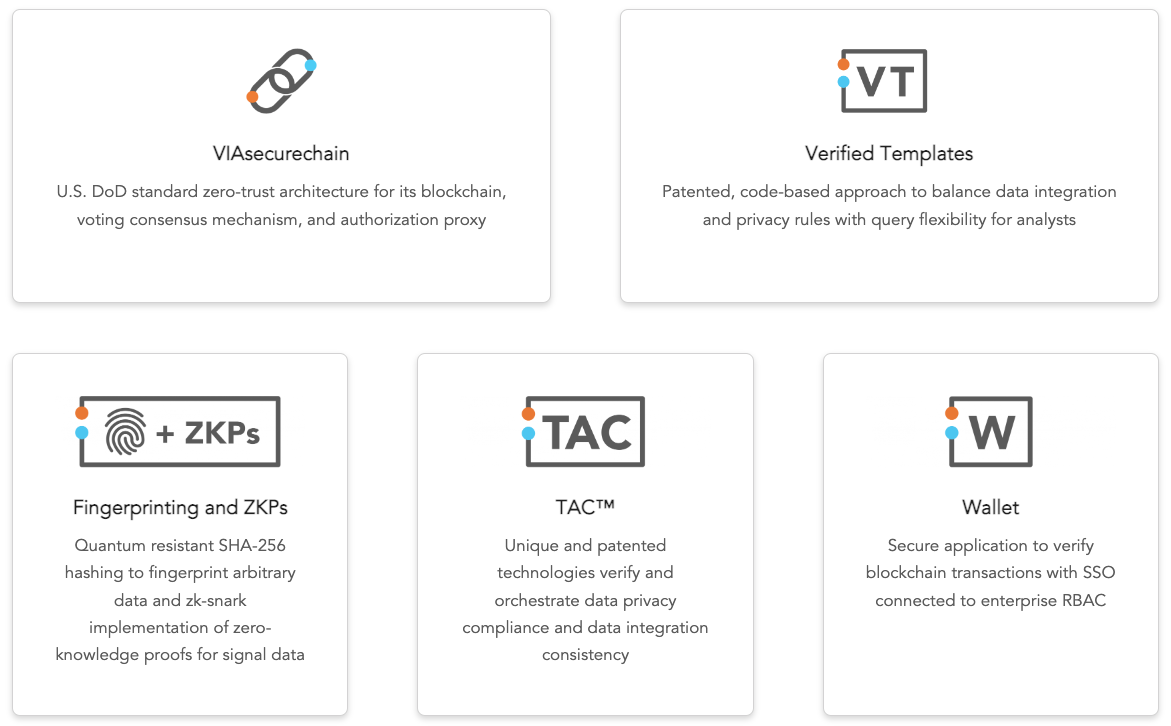
CybersecurityAll customers, like those in critical infrastructure such as energy and transportation care about cybersecurity standards. This is particularly true for VIA’s defense customers. This requirement was not something that we found anywhere else.The result is that VIA forked code from BigchainDB and Tendermint and invested to meet the U.S. TOP SECRET level cybersecurity standards (e.g., zero-trust architecture, hardened containers) for the blockchain, consensus mechanism, and the hash storage database (MongoDB). The combination of these three elements are the core of VIAsecurechain. The result is that VIAsecurechain is the U.S. Department of Defense’s first and only cybersecurity accredited blockchain.

Explore the other components of VIA’s Web3 platform here and read more about VIAsecurechain in our solution brief.

[1]  Of course, the combination of a data-centric blockchain with a public, financial transaction blockchain enables the best of both worlds: secure markets for private data. This concept was first proposed in our 2018 white paper and now a reality through our partnership with Polygon.

Three VIAneers to attend 2023 Innovation Industry Days

Three of our very own VIAneers will be attending Innovation Industry Days 2023 in San Antonio, TX. The three-day event is hosted by AFWERX in partnership with Installation Mission Support Center. According to AFWERX, “this event will provide training sessions on how to navigate this innovation ecosystem, as well as connecting Government, Academia and Industry stakeholders”. Look out for the VIA booth on January 25th!
Register for the event here.

VIA announces 10th patent granted in January 2023

VIA, the leader in Web3 for secure verification, integration, and analysis of private data, is pleased to share that the United States Patent and Trademark Office has granted VIA its 10th patent. The patent portfolio covers a range of Web3 capabilities including cryptography, and secure, decentralized AI analysis orchestration.

GreenBiz highlights VIA CEO’s insights about electric vehicles

As we enter 2023, many of us in the energy space are eager to learn about the year’s outlook. If you are one of those people, you are in luck, because VIA’s CEO Colin Gounden was selected to share some valuable insights in a recent article by GreenBiz. This feature is a part of an extensive 2023 predictions piece in the transportation and mobility sector. The author of the article Vartan Badalian, GreenBiz Group Transportation Analyst, offers his thoughts on the race to net zero. Vartan highlights challenges, opportunities, and trends shared by world transportation leaders, such as Delta Air Lines, Lyft, Enel X Way, and many others. 

While more than 20 experts provide their views, Colin’s comments are the only ones related to Web3 and also bidirectional charging:

We expect a dramatic rise in vehicle-to-building and vehicle-to-grid charging. With extreme weather, aging infrastructure and record supply chain shortages, the new generation of bidirectional electric vehicles will be a highly attractive source of energy flexibility for grid operators. Web3 technologies like zero-knowledge proofs will help verify that the electrons returning to the grid are from renewable sources while maintaining the privacy and anonymity of EV owners.

To read the full article on the GreenBiz website, click here. Curious to learn more or continue the conversation? Feel free to reach out to Colin directly on LinkedIn or email our team at info@solvewithvia.com

VIA’s 2022 Highlights in 60 Seconds –
How the VIA values shaped our 2022

One clear theme for VIA emerged in 2022: W3. What do we mean by that? VIA CEO Colin Gounden explains in under 60 seconds.


Examples of Living Our VIA Values in 2022

The VIA values are expressed not just in our day-to-day interactions and culture, but also as a guide for decisions we make as a company. Here’s a look back at how we integrated our values into everything we did in 2022.


Love in = Love out

Our Love in = Love out value is all about taking pride in what you do. VIAneers got to express their pride in our mission captured in the video below.

Be each other’s biggest fan

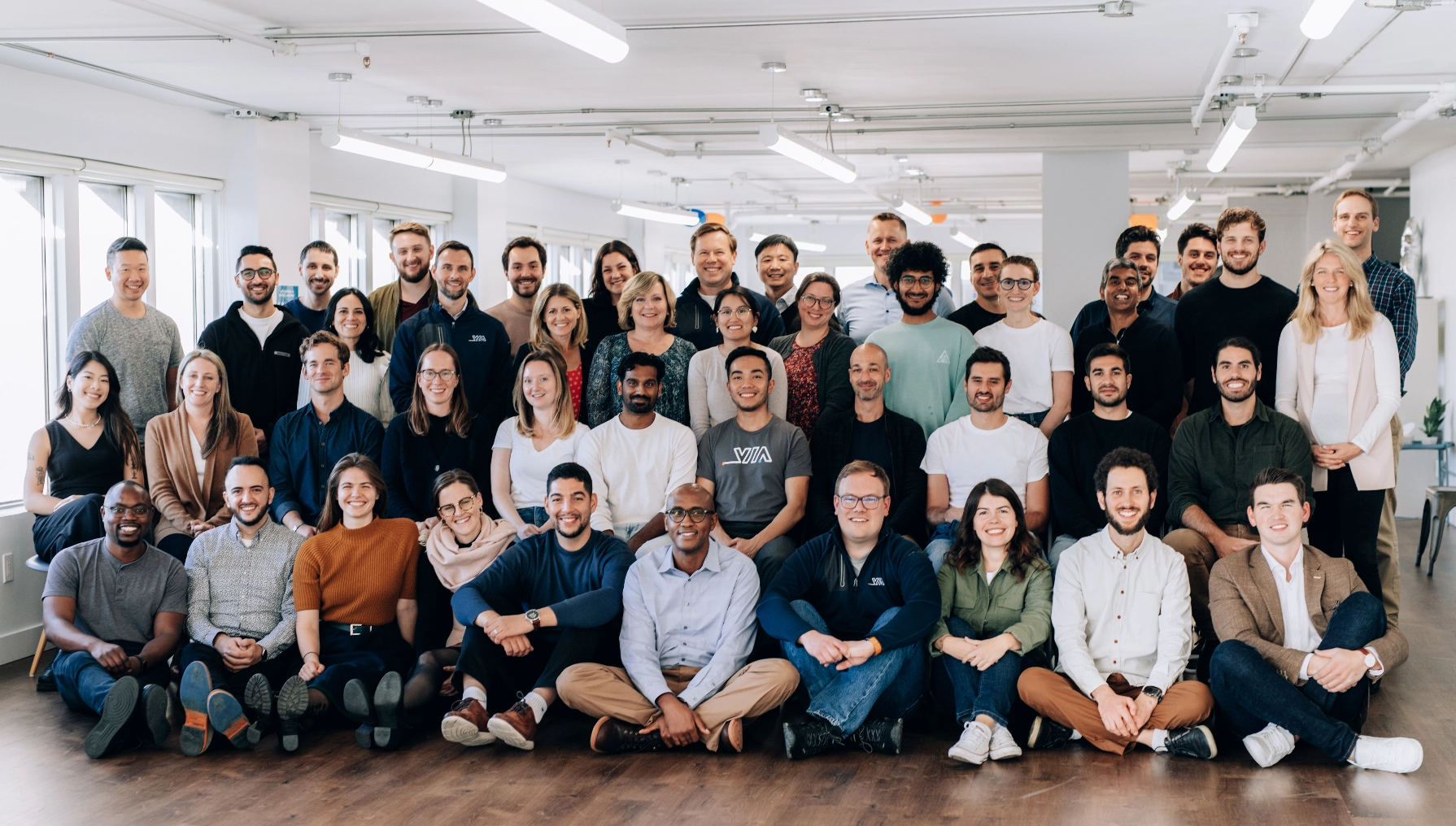
For the first time in three (3!) years, we hosted our semi-annual Power Up in person at our Montreal office. This was our largest company onsite ever with nearly 20 new VIAneers hired this year. VIAneers got together to share ideas, lend support, and brainstorm.

As a company located across multiple countries, we know that getting ALL of our VIAneers in one space was not an easy feat. In true VIA fashion we’d like to share a shout out to our People & Operations team for organizing and coordinating a fabulous multi-day onsite!

Stay curious

As a company at the forefront of cutting-edge Web3 technologies, not only do we need to be curious about what others are building in the community, but we share our own learnings as well.

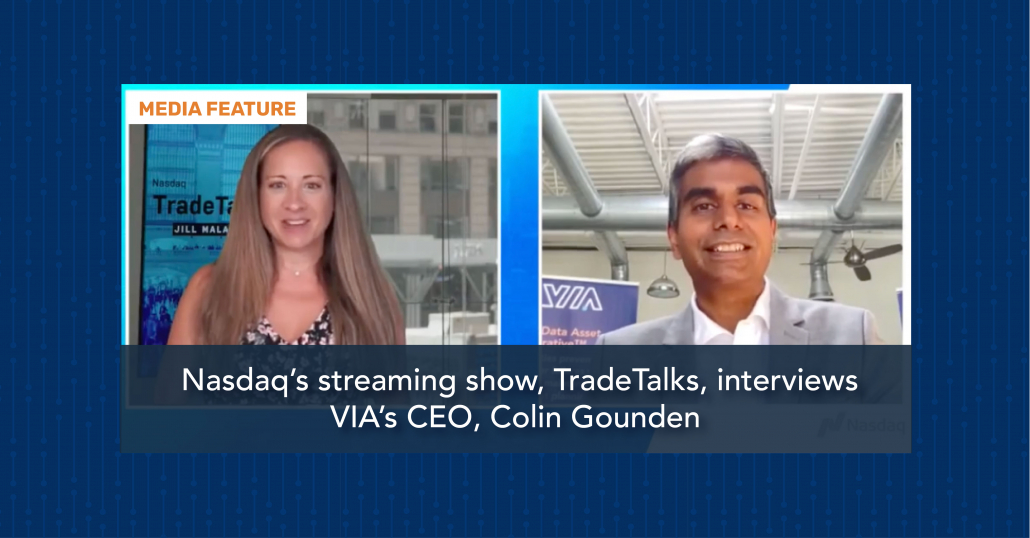
In 2022, VIA was featured in a record number of podcasts. One standout interview was with Nasdaq’s TradeTalks, where VIA CEO, Colin Gounden, explained the connections between Web3, blockchain, the U.S. DOD, and clean energy in 6 minutes.

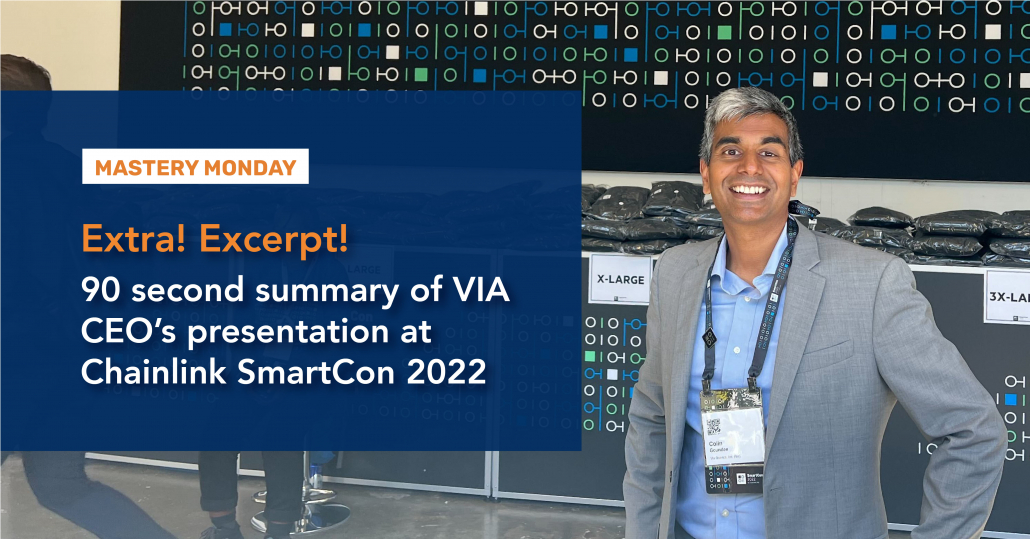
Not only were we giving talks remotely – we did it in person too! Chainlink invited VIA to speak at 2022’s must-attend Web3 event, SmartCon 2022. Didn’t get to be there? Luckily for you we have a 90 second summary of Colin’s talk!


Learning never goes out of style

At VIA, we’re always learning. We began the year by being one of only ten companies out of more than 100 applicants selected to join Wharton University’s Stevens Center Cypher Accelerator program, where we learned from the biggest names in blockchain such as a16z and Pantera.

Then, we ended the year with another innovative accelerator program, when we were selected as one of only nine companies out of more than 200 applicants to learn from industry leaders at the AWS Sustainable Cities Accelerator for Infrastructure.


Ready, set, RESILIENCE!

In 2022, not only did we improve and upgrade our current technology infrastructure, we added brand new features to our Web3 platform. We wrote multiple blogs about zero-knowledge proofs, homomorphic encryption, and even shared some open source code.

Respect a challenge and challenge with respect

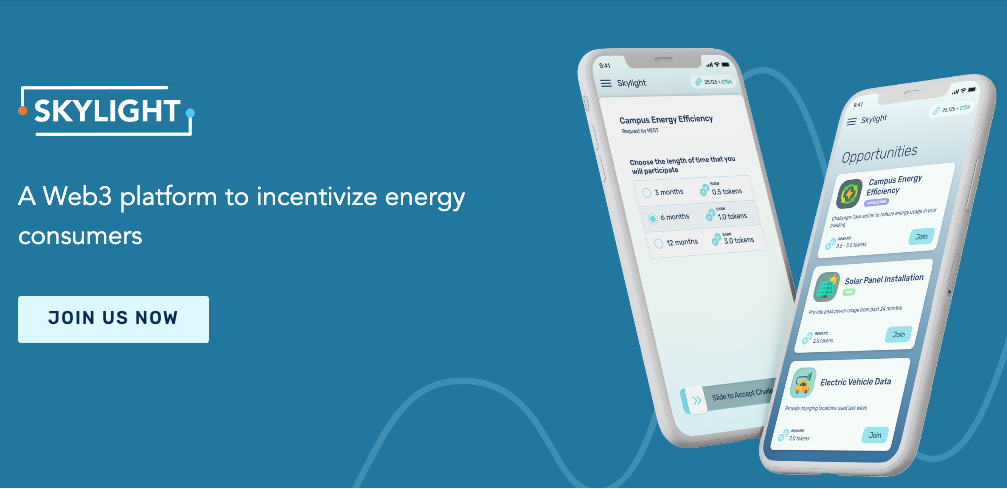
The energy sector faces tough challenges in war, weather, and waning infrastructure globally. This year VIA rose to that challenge with the launch of Skylight, our Web3 platform to support ultra-fine grained demand response. Read about how we leverage zero-knowledge proofs, NFTs, and more in our latest white paper.

And that’s a selection of our 2022 milestones! We couldn’t have done it without the contributions and continued support of customers, partners, and of course our very own VIAneers. 

In last year’s end of year reflection blog, we aimed to scale up in 2022 – all of which came true. After all, the best way to predict the future is to build it. In 2023, VIA is looking forward to announcing our contributions to communities big and small globally.

The year in Switzerland:
highlights of mission-driven initiatives in 2022

Avid VIA blog readers will be familiar with the many reasons for why we picked Switzerland as our European headquarters. In short, the country is a leader in clean energy, data privacy, and blockchain – three areas that strongly align with VIA’s mission to make communities cleaner, safer, and more equitable. 

The prestigious Tell Award we received in October of 2021 recognized VIA, along with Moderna, at a national level in Switzerland and set us up for an eventful year ahead. For all of you visual learners following VIA, here’s a look back at all things VIA that took place in Switzerland in 2022.

January 2022: Swiss media features VIA and HSLU in an article on securing smart meter data. Learn more here.

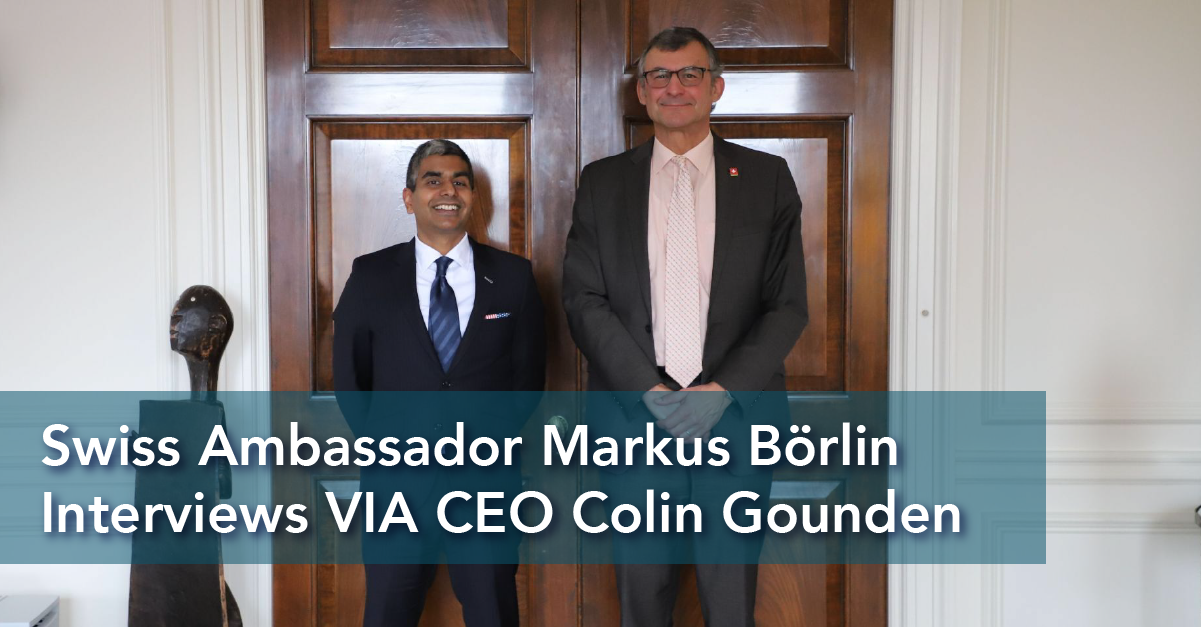
Swiss Ambassador to the United States, Markus Börlin, interviews VIA CEO Colin Gounden in New York. Learn more here.

EPRI puts VIA data privacy through its paces with an independent evaluation process. Learn more here.

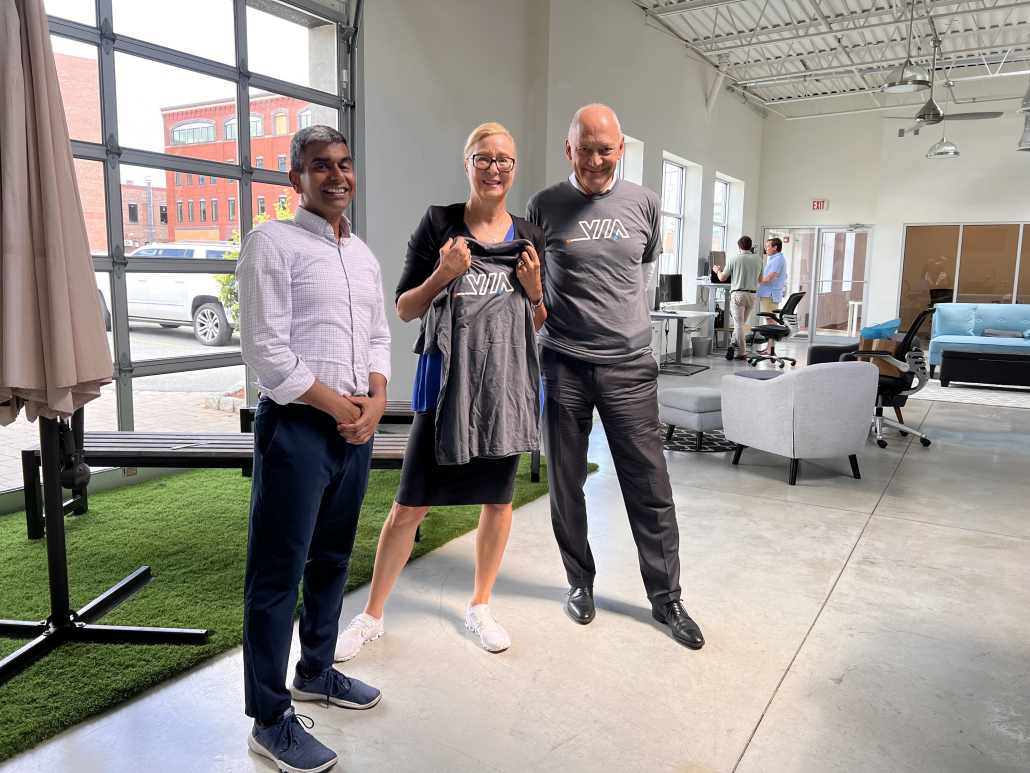
July 2022: The VIA team hosts Swiss VIAneers Jeanine Pilloud and Martin Ramsler at VIA’s Boston headquarters.

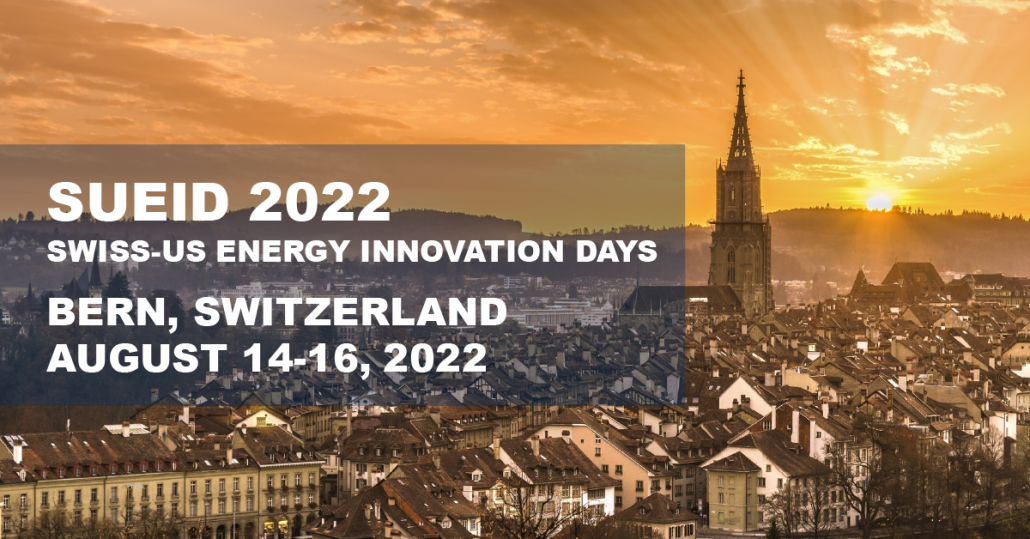
August 2022: VIA Expansion Manager Ray Neubauer speaks at the SUEID conference in Bern. Learn more here.

September 2022: VIA participates in the Energy Data Hackdays event in Brugg for the third consecutive year with a challenge developed by VIA’s Skylight team. Learn more here.

October 2022: Our Swiss site, solvewithvia.ch, is launched in three languages: English, French, and German.

Swiss podcast Insider’s Guide to Energy interviews VIA CEO Colin Gounden to talk blockchain and energy. Learn more here.

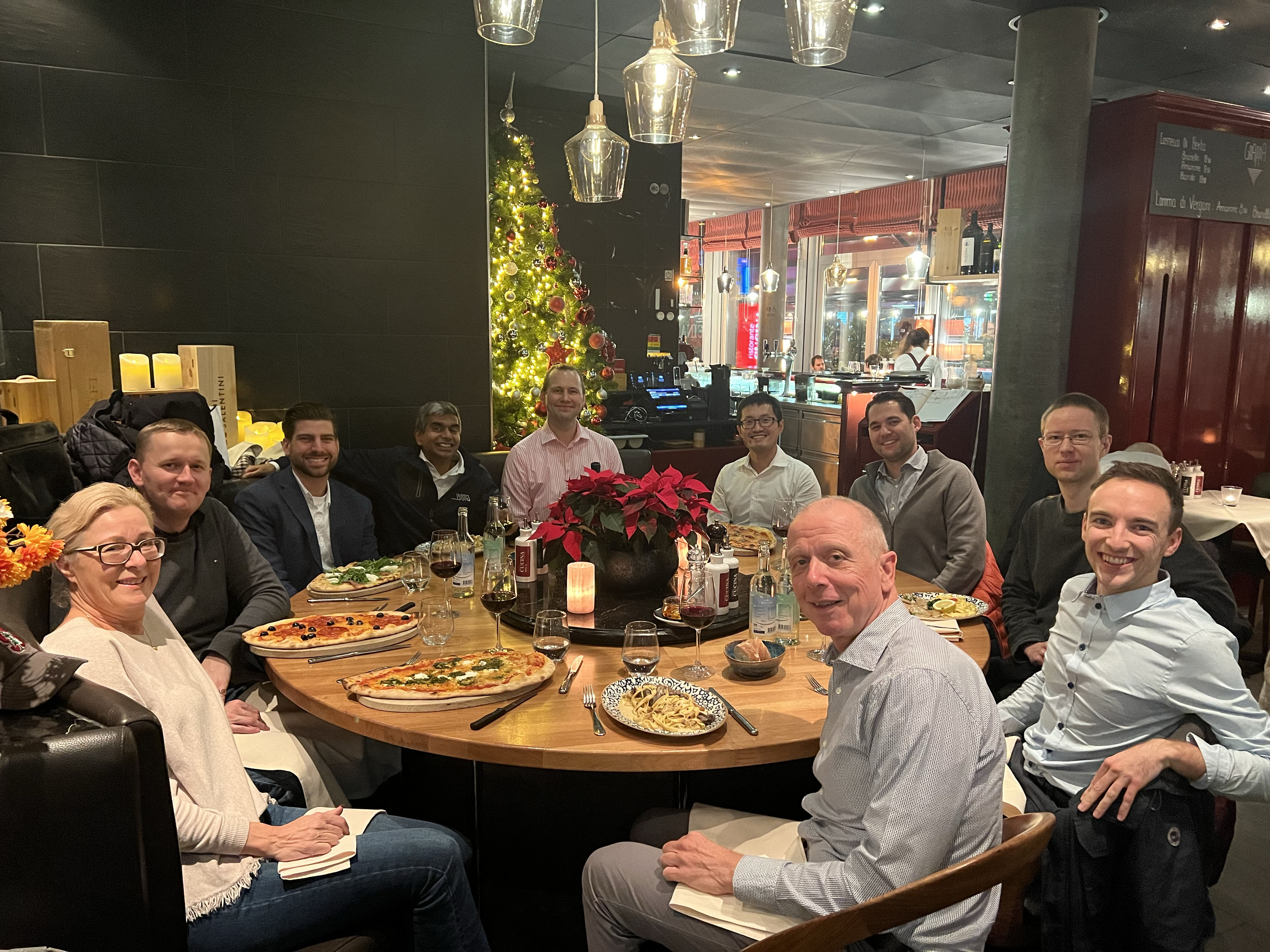
December 2022: VIA CEO Colin Gounden travels to Switzerland to meet with our Swiss counterparts and customers to talk Skylight. Pictured below – Innovation Process Technology in Zurich hosts Swiss VIAneers Raimund Philip Neubauer, Jeannine Pilloud, and Colin Gounden for dinner after a Web3 talk.

As 2023 approaches, we look forward to scaling the technology and partnerships in Switzerland. In the meantime, thank you to all our partners and VIAneers for your support in creating a solid foundation. We are sending our sincerest and warmest holiday wishes to all of our European communities.

Top Burning Questions Q3: What do cryptocurrencies have to do with data privacy?

Question: What do cryptocurrencies have to do with data privacy?

There is no shortage of news around cryptocurrencies today, especially given the collapse of FTX, the crypto exchange company, earlier this year. Now more than ever, a question that we are getting is how cryptocurrencies are relevant to our Web3 data privacy platform.

What astute readers know is that the “crypto” in “cryptocurrencies” is for cryptography. The tech stack in the blockchain ecosystem related to encryption, privacy, and security is evolving faster than the technology of any single company. This is the main reason that VIA is committed to leveraging crypto technologies in our data privacy solutions.

Zero-knowledge proofs (ZKPs) are a good example of this. Long-time VIA blog readers will be very familiar with ZKPs. While their mathematical origin goes back to 1982, the first widespread application came from verifying cryptocurrency transactions. Here’s a quick example:

Imagine a disagreement between Adam trying to buy one bitcoin from Eve. Eve says she sent it. Adam says he never received it. In a traditional banking transaction, Adam and Eve would know each other’s names, bank details, and there would be at least one bank that can verify what happened. In the case of a cryptocurrency like bitcoin, the whole point is anonymous (so Adam and Eve don’t know each other) and peer-to-peer (so there’s no independent middleman to verify) transactions. That’s where ZKPs come in. They are a software mechanism to verify a transaction of a digital asset while maintaining the anonymity of each party, and without the need for a middleman.

That neat trick of verifying a digital transaction between two direct parties and maintaining the privacy of each one is hugely valuable in more than just bitcoin. In VIA’s case we made a choice to leverage ZKPs in energy and data transactions rather than try and invent a new technology. ZKPs are just one of the many digital asset privacy and protection mechanisms we use at VIA from the crypto world. 

Of course, don’t just take our word for it. Large, established institutions are formally embracing Web3 technologies.

“The DoD believes that Web 3.0 Blockchain technology can be leveraged to build systems that focus on protecting the data independently of the systems that store, transport, and process it through decentralization.”

That’s a recent quote from the CIO of the U.S. Department of Defense. In the past few months we’ve seen a significant uptick in the number of large companies that are asking us more sophisticated questions about our blockchain and Web3 technologies to embed with their own Web3 teams and initiatives. We see a bright future in blockchain and Web3 for those interested in the best in data privacy technology. 

Top Burning Questions Q2: Why do we work with the DoD, and what does it mean to have a top secret cybersecurity accreditation?

Question: Why do we work with the U.S. Department of Defense, and what does it mean to have a top secret cybersecurity accreditation?

In short, our work with the U.S. Department of Defense (DoD) is in direct support of our mission. Long-time readers will be familiar with our core mission to make communities cleaner, safer, and more equitable.

Of course, the DoD provides humanitarian assistance ranging from providing food and shelter to individuals impacted by natural disasters to evacuating refugees from war-torn regions.

Air Force personnel load a supply of rice and soy-based meals for shipment to Guatemala. Photo by U.S. Air Force.

There is also a strong tie to energy, where we focus almost all of our commercial solutions. As a nation, the U.S. is the single largest consumer of energy on the planet. Moreover, a whopping 77%1 of the energy consumption of the entire U.S. Government is by the U.S. DoD. In our view, if we aim to accelerate clean energy, then working with entities like the U.S. Air Force to adopt electric vehicles and move to renewables is a must.

In addition, working with DoD installations on the topic of electrification helps us learn about how we can support civilian communities. A military base is like a city, with tens of thousands of people, thousands of buildings, roads, and vehicles. How we make a base more efficient directly helps us make urban environments cleaner.

Last, but not least, there’s the cybersecurity element. The standards required for our Web3 platform to run at the DoD include things like zero-trust architecture, hardened containers, and continuous vulnerability checks. Everything we do at the DoD can be brought to our commercial customers who are equally concerned about cybersecurity attacks. In our view, there is no higher standard for cybersecurity, and therefore no better way to make our communities safer.

We’re just beginning our work at the DoD. We look forward to a long relationship to support the DoD’s mission and, at the same time, bring our knowledge to improve the lives of residents in local communities.

Are you a community transitioning to clean energy and electric vehicles? We’d love to hear from you regarding your journey and share your learning with others.

DataDrivenInvestor highlights Tech on Reg podcast interview with VIA CEO Colin Gounden

Dara Tarkowski, host of the Tech on Reg podcast, published an article on DataDrivenInvestor, a media platform at the intersection of technology, finance, and society. The article covers key points from the recent podcast interview she did with VIA’s CEO, Colin Gounden. Dara commented that the conversation with Colin around technology and clean energy was both relevant and timely: 

“In light of the global energy crisis and the perennial, devastating effects of climate change, it’s about time we talked about how technology can disrupt our reliance on fossil fuels.”

In the article, Dara breaks down the different insights Colin gave on data privacy, federal intelligence, energy data, and equity. One quote from Colin highlighted in the article that stands out is when he describes the reasons why local and national government agencies are investing in energy independence:

“I don’t know that it was the case a few years ago when we started, but it’s becoming the case now, for two major reasons. One is that since the start of the Russian invasion of Ukraine, cyber attacks on the power grid infrastructure have gone up tenfold. That’s a big concern for local and national governments, because these attacks go much deeper than simply disabling popular websites. Modern life requires a lot of electricity, so protecting our grid is fundamental in our societal hierarchy of needs. If you lose the internet, it’s inconvenient and you kind of go back to life in 1976. If you lose power, you go back to life in 1876.” 

To discover the second major reason Colin touches on, head over to the DataDrivenInvestor website and read the full article